 Russian
 English
 German
 French
 Korean
 Spanish
Соответствие европейскому стандарту EN 71 для плюшевых игрушек: объяснение частей 1, 2 и 3 для импортеров
Selling plush toys into the European Union without understanding EN 71 is like shipping without a packing list — technically possible, practically a customs detention waiting to happen. EN 71 is the harmonized European toy safety standard suite under the Toy Safety Directive 2009/48/EC, and for plush products three parts are mandatory: EN 71-1 (mechanical and physical properties), EN 71-2 (flammability), and EN 71-3 (migration of certain elements). Unlike the US regime we covered in our ASTM F963 testing guide, EN 71 adds a chemical-migration pillar with 19 controlled elements — and an EN 71-1:2026 edition published in January 2026 has updated several requirements that affect plush construction directly.
На сайте StuffPlush, we produce EU-bound плюшевые игрушки with EN 71 testing built into every program, and the questions we hear from importers cluster around the same confusion points: which parts apply, what the actual numeric limits are, and what specifically fails on plush. This guide answers all three — part by part, with plush-specific failure modes and the documentation trail the EU expects you to keep.
The Regulatory Frame: Directive + Standards + CE Mark
Understanding the structure prevents the most common compliance mistake (assuming a test report equals permission to sell):
- Toy Safety Directive 2009/48/EC — the law. Applies to all products intended for children under 14.
- EN 71 series — the harmonized technical standards. Meeting them creates a “presumption of conformity” with the Directive.
- CE marking — your declaration that the product conforms, affixed on the product and packaging (minimum 5 mm, permanently legible).
- Technical Documentation File (TDF) — retained for 10 years, available to market surveillance authorities on demand.
Critically, EN 71 testing does not replace your legal obligations: the importer of record carries responsibility for the Declaration of Conformity (DoC), labeling, and traceability — a factory test report is supporting evidence, not a compliance transfer.
EN 71-1: Mechanical and Physical Properties
Part 1 is the plush-relevant twin of ASTM F963 Section 4.8, with some different numbers and some plush-specific requirements the US standard does not emphasize.
Key Tests and Pass Criteria for Plush
| Test | Requirement (Plush-Relevant) | Common Plush Failure Mode |
|---|---|---|
| Small parts cylinder | Toys for under-3s: no detachable component fits the cylinder (Ø 31.7 mm) | Bows, bells, pompoms detaching after tension tests |
| Tension test | Attached components must not detach (≈ 70–90 N depending on component/age grade) | Safety eyes without washers; glue-fixed noses |
| Torque test | Components must not release hazardous parts when twisted | Poseable limbs on internal wire armatures |
| Sharp edges/points | No accessible sharp edges or points, including post-abuse-test | Wire armature ends protruding after compression |
| Seam strength | Seams must not rupture to expose filling | Understuffed seams popping under tension |
| Cords and chains | Length restrictions to prevent strangulation (roughly: cords > 22 cm on targeted toys need evaluation) | Decorative neck ribbons on plush toys |
| Filling cleanliness | Plush-specific: filling must be clean, hygienic, free of vermin (recycled material restrictions; total bacterial count limits commonly cited ≤ 200 CFU/g for stuffing) | Unspecified or reclaimed fill material |
| Drops and impact | Toy must remain safe after abuse sequence | Frame fracture exposing sharp plastic |
Two plush-specific points deserve emphasis. First, filling cleanliness is a formal EN 71-1 requirement, not just good practice — your TDF must document the filling material source, and reclaimed/recycled cotton filling is commonly prohibited or restricted for this reason. Second, the 2026 edition of EN 71-1 (published January 2026) tightened several construction requirements, so test reports referencing older editions may not satisfy current EU market surveillance — confirm your lab tested to EN 71-1:2026 for new programs.
EN 71-2: Flammability
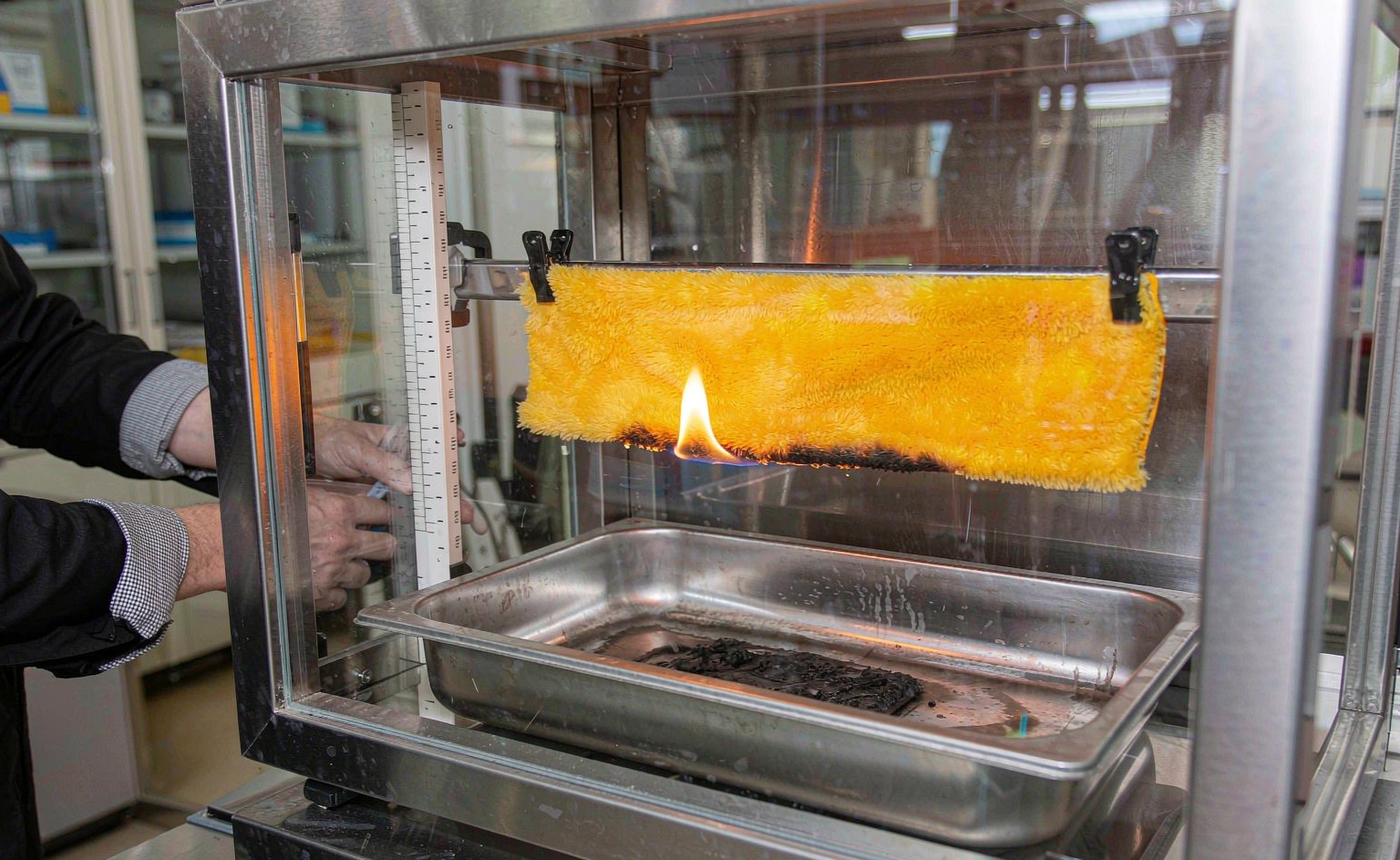
The flammability requirement for plush sounds simple — keep the burn rate low — but the test method and the “no dripping” clause are where plush programs actually fail.
The Requirements
| Параметр | Requirement |
|---|---|
| Burn rate limit | Surface flame spread must not exceed 30 mm/s on plush/textile toys (some plush-relevant configurations apply stricter limits; confirm with your lab for the exact configuration) |
| Prohibited materials | Highly flammable cellulosics (e.g., celluloid) banned outright |
| Molten drips | No flaming debris that ignites cotton wool below — an automatic veto even at compliant burn rates |
| Post-flame behavior | Materials must not sustain dangerous afterglow/self-ignition behavior |
Why Plush Fails Flammability
Three real-world failure patterns dominate:
- Synthetic pile melting behavior: polyester plush burns slowly but melts and drips — and molten drips are a veto criterion. Fabric blends and backings matter as much as the face fabric.
- Decorative components: satin ribbons, tulle skirts, and glitter mesh on dressed plush burn far faster than the body fabric — every accessory material must pass, not just the shell.
- Fill interaction: loosely stuffed toys allow oxygen circulation inside, sustaining smoldering. Denser, properly compacted stuffing behaves measurably better — one more reason fill density is a spec item, not a feel decision (see our cost drivers analysis).
Buyer action: request the burning-rate curve from the lab report, not just a pass/fail — a marginal pass on a specific colorway can become a fail in the next dye lot. Test the darkest and lightest colorways, plus any dressed/accessorized variant.
EN 71-3: Migration of Certain Elements
Part 3 is the pillar with no US equivalent in ASTM F963 — and the one where plush programs most often discover problems late, because migration limits apply to what a child’s saliva can pull out of the material, not just total content.
The 19 Controlled Elements and Category Limits
EN 71-3 restricts migration of 19 elements (lead, cadmium, mercury, chromium, arsenic, selenium, antimony, barium, boron, cobalt, copper, nickel, zinc, and others), grouped into three material categories with different limits:
| Material Category | Applies To | Lead (Pb) Limit | Cadmium (Cd) Limit |
|---|---|---|---|
| Category I — dry, brittle, powdery | Chalk-like materials, brittle plastics | 13.5 mg/kg | 1.3 mg/kg |
| Category II — liquid or sticky | Paints, slurries, lipsticks | 3.4 mg/kg | 0.3 mg/kg |
| Category III — scraped-off | Coatings, plastics, textiles | 160 mg/kg | 1.3 mg/kg |
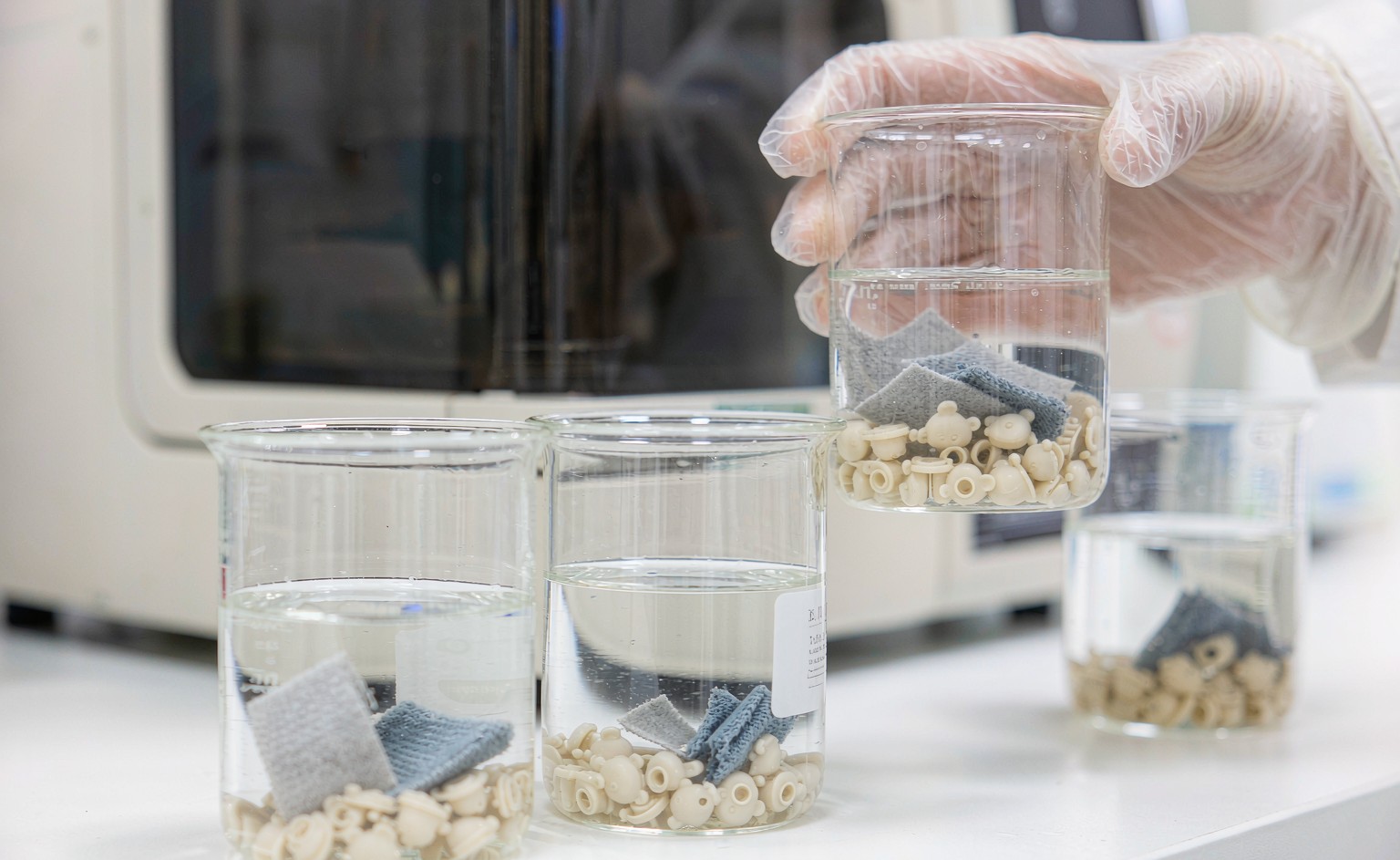
Plush toys interact with EN 71-3 in three places: the textile shell (dyes and pigments — Category III), the printing inks (screen print and transfer decorations — Category III, and inks can behave as Category II), and plastic components (safety eyes, noses, pellets — Category III). Lead and cadmium historically enter through cheap pigment systems and recycled materials, which is one reason filling cleanliness and material traceability matter as much as the final test result.
The Phthalate Layer
Plush toys with plasticized components (safety eyes, noses, squeakers, pellet bags) also face the REACH phthalate restriction: the four restricted phthalates (DEHP, DBP, BBP, DIBP) are limited to ≤ 0.1% each (0.3% combined) in plasticized materials. Quality safety-eyes suppliers certify compliance; bargain eyes from uncertified sources frequently do not — component-level certificates belong in your TDF.
The Documentation Trail: What the EU Actually Checks
A test report is one artifact among several. The full compliance package for EU-bound plush:
| Artifact | Content | Retention |
|---|---|---|
| Test reports | EN 71-1/-2/-3 from a lab with 2009/48/EC scope (check the NANDO database for notified body status); samples must cover every fabric, colorway, and accessory material | 10 years |
| Bill of Materials | Material list down to component level (“100% polyester shell, virgin PP cotton fill, TPR eyes”) with supplier certificates | 10 years |
| Risk assessment | Documented hazards and mitigations: small parts, filling leakage, cord entanglement | 10 years |
| Declaration of Conformity (DoC) | Signed by manufacturer or EU authorized representative, citing 2009/48/EC and the EN 71 series | 10 years |
| Labeling | CE mark (≥ 5 mm), manufacturer name/address, EU representative, batch number — on the smallest sale unit | Permanent |
| EU Authorized Representative | Mandatory for non-EU manufacturers: a named EU-based entity on the DoC and label | Current |
REACH adds one more layer: any Substance of Very High Concern (SVHC) present above 0.1% must be declared — and the SVHC candidate list keeps growing, so your material declarations need refreshing periodically.
How Plush Programs Actually Fail EN 71 (and How to Prevent It)
| Failure | Root Cause | Prevention |
|---|---|---|
| Eye/nose detaches at 70–90 N | Glue-fixing or no backing washer | Safety eyes with mechanical lock washers, factory pull-tested |
| Burn rate marginal/fail on dressed plush | Ribbon/tulle accessories faster than body fabric | Test every accessory material; choose flame-tolerant trims |
| Molten drip veto | Polyester blend backing melts under flame | Select backing materials with documented EN 71-2 behavior |
| Lead migration from print | Cheap pigment inks on decorated panels | Require ink compliance certificates per colorway |
| Filling cleanliness rejection | Reclaimed fill of unknown origin | Specify virgin or certified fill with supplier traceability (see our cost drivers stuffing section) |
| Cord-length flag | Long decorative neck ribbon | Design ropes/ribbons below restricted lengths or eliminate |
The pattern across all six: failures are design-stage decisions, not lab-stage surprises. This is exactly why our sampling protocol includes compliance review before the first sample is cut — and why fabric choice (covered in our velboa vs minky guide) should be made with EN 71-2 and EN 71-3 behavior in mind, not just hand-feel.
EN 71 vs ASTM F963: The Plush Buyer’s Quick Map
If you ship to both markets (most plush importers do), this is the practical translation table:
| Dimension | ASTM F963 (США) | EN 71 (EU) |
|---|---|---|
| Mechanical testing | Section 4.8 abuse sequence | Part 1 (similar tests, different force values) |
| Flammability | Limited plush-specific requirements | Part 2 mandatory with burn-rate + drip criteria |
| Chemical migration | 8 soluble heavy metals (total content focus) | Part 3: 19 elements, migration-based, three material categories |
| Phthalates | CPSIA: 8 phthalates ≤ 0.1% | REACH: 4 phthalates ≤ 0.1% |
| Documentation | CPC + CPSC-accepted lab report | DoC + TDF + NANDO lab + CE mark |
| Certification model | Third-party testing mandatory | Self-declaration possible for low-risk plush, with documented evidence |
The EU’s chemical pillar is genuinely stricter — a plush that passes US testing can fail EN 71-3 on pigment migration. The efficient strategy: design to the stricter of each pair (EN 71-2 flammability, EN 71-3 chemistry) and test once, comprehensively, with reports valid for both markets.
How StuffPlush Handles EN 71 for EU-Bound Programs
На сайте StuffPlush, EN 71 compliance is engineered into EU-bound plush programs rather than bolted on:
- Design-stage compliance review: components, trims, inks, and fill are selected against EN 71-1/-2/-3 requirements before sampling
- Full three-part testing to the current EN 71-1:2026 edition, with colorway and accessory coverage, from labs with 2009/48/EC scope
- Documentation package: test reports, BOM with supplier certificates, risk assessment, and DoC support including EU authorized representative arrangement
- Component-level traceability: safety eyes, inks, and fill carry certificates into your TDF, keeping the 10-year audit trail complete
Часто задаваемые вопросы
Какие части стандарта EN 71 являются обязательными для плюшевых игрушек?
For virtually all plush toys: EN 71-1 (mechanical and physical properties), EN 71-2 (flammability), and EN 71-3 (migration of certain elements) — the three mandatory parts under the Toy Safety Directive. Additional parts apply conditionally: EN IEC 62115 for plush with electronic components (sound modules, LEDs), and EN 71-4/-5 for chemical toys (irrelevant to plush). Parts 7–13 cover finger paints, arrow sets, and similar specialized categories that do not apply to plush.
Каковы предельные значения содержания свинца по стандарту EN 71-3 для мягких игрушек?
EN 71-3 sets migration limits by material category, not per product: Category I (dry/brittle/powdery) 13.5 mg/kg, Category II (liquid/sticky) 3.4 mg/kg, Category III (scraped-off materials — which includes plush textiles and plastic components) 160 mg/kg for lead. Cadmium is limited to 1.3 mg/kg (Categories I and III) and 0.3 mg/kg (Category II). All 19 controlled elements have category-specific limits — your lab report should list each element against its applicable category. Note that pigment-borne lead in prints and dyes is the most common source of plush failures.
Истекает ли срок действия сертификата EN 71?
The test report itself has no statutory expiry, but three forces age it: standard editions update (EN 71-1:2026 replaced the previous edition in January 2026 — old-edition reports may not satisfy current market surveillance), material sources change (a new dye lot or new eye supplier invalidates chemical results), and the SVHC list grows (REACH declarations need refreshing). Best practice: refresh full EN 71 testing annually for ongoing SKUs, and retest whenever materials, suppliers, or construction change. Retailers commonly enforce the 12-month convention regardless.
Можно ли использовать один отчёт об испытаниях по стандарту EN 71 для нескольких цветовых вариантов одной и той же мягкой игрушки?
Only with documented rationale. Chemical migration results depend on dyes and pigments, which differ per colorway — so a navy plush’s EN 71-3 result says nothing about its pink variant. Labs offer family testing at reduced rates: test the highest-risk colorway (typically the darkest, highest pigment load) plus a documented equivalence rationale for the others. Mechanical testing (Part 1) can genuinely share a report across colorways when construction is identical — but flammability (Part 2) and chemistry (Part 3) need per-material coverage. Ask your lab for a family-testing proposal before ordering tests individually.
Что такое уполномоченный представитель в ЕС и действительно ли он мне нужен?
Yes, if your company is established outside the EU — it is a legal requirement under the Toy Safety Directive, not optional paperwork. The authorized representative is an EU-established entity named on your Declaration of Conformity and product labeling, who holds your Technical Documentation File and acts as the contact point for market surveillance authorities. Market surveillance can and does check for this: plush detained at EU ports for missing representative information is a real, common scenario. Many compliance firms offer representative services for a modest annual fee; your manufacturer cannot self-appoint unless they are EU-established (which no Chinese plush factory is).

Conclusion: EN 71 Is a Design Discipline, Not a Lab Transaction
The EU regime rewards importers who treat EN 71 as an engineering input rather than a customs formality. The three mandatory parts map cleanly onto decisions you make anyway — mechanical construction (Part 1), fabric and trim selection (Part 2), and component sourcing (Part 3) — and every plush failure pattern in this guide traces back to a decision that was cheap to change at design stage and expensive at port.
На сайте StuffPlush, EU-bound custom plush programs run EN 71 compliance from design review through full three-part testing to a complete Technical Documentation File — including the current EN 71-1:2026 edition and component-level certificates. If you are planning an EU plush program, start with our safety standards overview, cross-check your decoration choices against our decoration wash-test guide, и связаться с нами for a program plan with the compliance calendar built in.