 French
  English
  German
  Russian
  Korean
  Spanish

Why do so many names describe one cuddly companion? A softie is a soft, huggable fabric toy, usually filled with a flexible material. It may be an animal, a favorite character, a doll, or even a smiling slice of toast. The names overlap, but their meanings can shift according to the fabric, the product category, and the country where you shop.
This guide makes the language simple. It explains the difference between soft toys, animaux en peluche, and plushies; shows what they are made of; and helps you choose, clean, gift, or collect them. Whether you are buying for a baby, a teenager, a collector, or yourself, the best choice is one that feels right and fits its purpose.
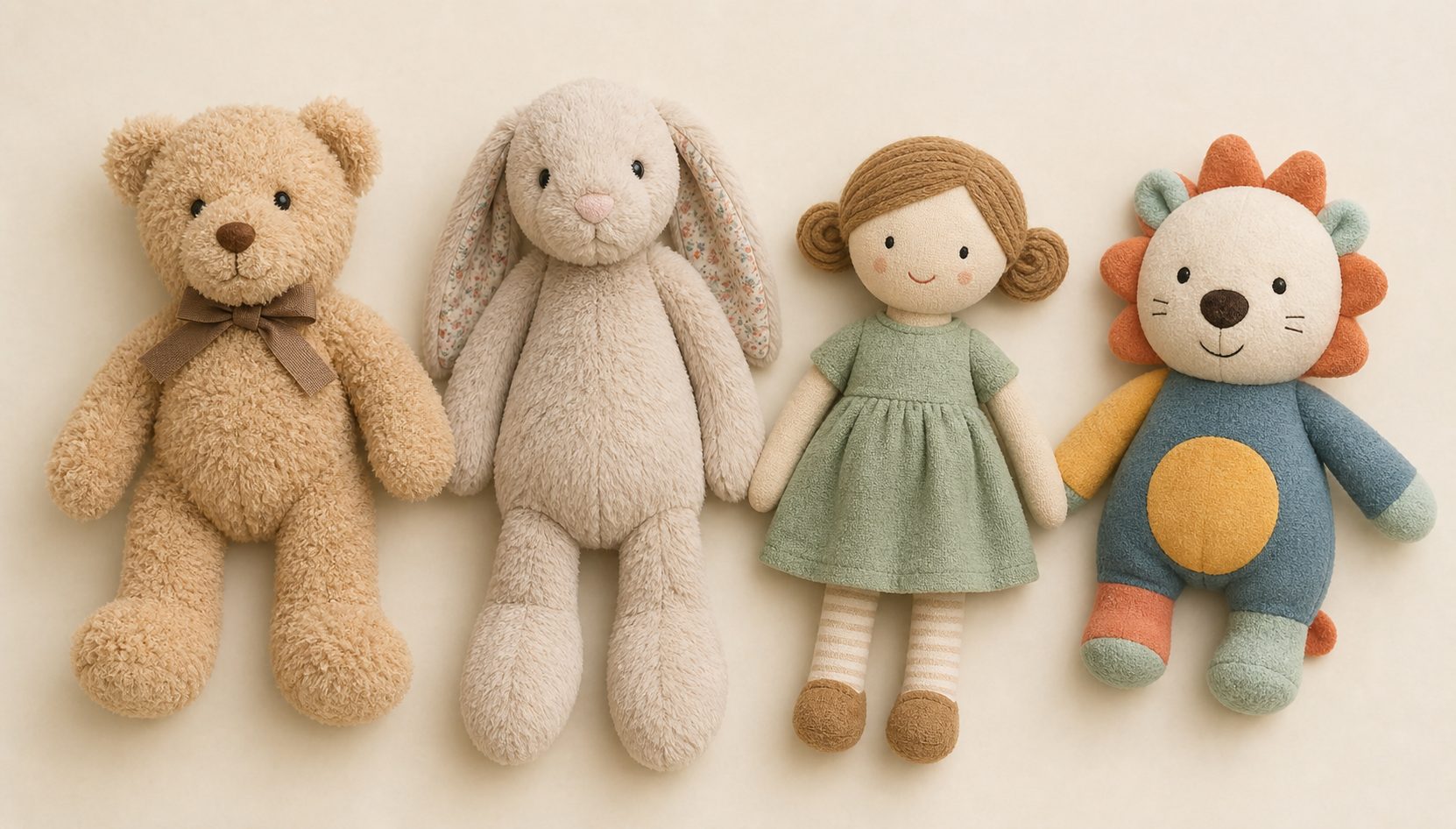
A range of soft toys, including a teddy bear, rabbit, fabric doll, and character plush.
It also gives you useful questions to ask before purchasing: Is it age-appropriate? Can it be cleaned easily? Does its size work for the space? Those simple checks turn a cute choice into a practical one.
There is no single perfect soft toy for everyone. A small porte-clés en peluche may suit a traveler, while a large teddy bear may suit a milestone gift. A baby may need a simple washable comforter, and a collector may want pristine tags and packaging. By separating these needs, you can shop more confidently and enjoy the toy longer after it arrives.
| Quick answer: A softie is a casual name for a soft, cuddly toy. “Soft toy” is the broad category, “stuffed animal” usually means an animal-shaped toy, and “plushie” often points to a toy made from fuzzy pile fabric. |
What Is a Softie?
A simple definition
A softie is made to be held. Most have a textile shell and a soft filling such as polyester fiber, cotton, foam, or recycled material. Their appeal is straightforward: they feel pleasant in the hand, look friendly, and can become part of playtime, bedtime, travel, or room décor.
Some softies resemble real animals. Others take the shape of fictional characters, dolls, food, plants, or everyday objects. The word is informal, so it does not set a strict rule about the toy’s shape or fabric.
The names people use
People often use softie, soft toy, stuffed animal, stuffed toy, plushie, and plush toy as if they mean the same thing. In ordinary conversation, that is usually fine. For shopping, collecting, and product descriptions, however, each term can give a slightly different expectation.
| Term | What it usually means | Exemples |
| Soft toy | Broad category for soft, fabric-based toys. | Dolls, fabric books, blocks, cushions, plush animals |
| Stuffed animal | A filled soft toy shaped like an animal. | Teddy bears, rabbits, dogs, dinosaurs |
| Plushie / plush toy | Usually a soft toy made from pile or fuzzy fabric. | Minky bears, velboa characters, faux-fur animals |
| Softie | A friendly informal name for a cuddly toy. | Any beloved soft toy or plush companion |
In the United States, “stuffed animal” is a familiar everyday term. In the United Kingdom and Australia, shoppers are more likely to say “soft toy” or “cuddly toy.” Online, “plushie” and “softie” are popular across regions, especially among collectors and fans.
Soft Toys vs. Stuffed Animals vs. Plush Toys
What is the real difference?
A stuffed animal is almost always a soft toy because it uses fabric and filling. Yet not every soft toy is a stuffed animal. Soft dolls, fabric books, soft blocks, comforters, and pillow-style characters are all soft toys, but they do not have animal shapes.
Plush toy has a more material-focused meaning. Plush fabrics have raised fibers, called pile, which create a fuzzy, velvety, or furry surface. A minky bear, velboa character, or faux-fur rabbit is likely to be called a plushie. A flat cotton rag doll can still be soft, but it may not be marketed as plush.
Why the wording matters when shopping
Words help shoppers find what they want. Search “stuffed animal” when you want a classic animal companion. Search “plushie” when texture, character styling, or collectibility matters. Search “soft toy” when you want a wider category, including dolls and baby-friendly fabric items.
Retailers often use several terms in one product title because customers use different search habits. This is helpful when you know the product details to check next: size, age label, fabric, filling, washable care, and attached features.
What Are Soft Toys Made Of?
Outer fabrics
The outer fabric decides much of a toy’s first impression. It affects softness, shine, durability, lint resistance, and how clearly embroidered facial features appear. Good fabric choices also suit the toy’s role: a baby comforter needs a different feel from a collectible faux-fur creature.
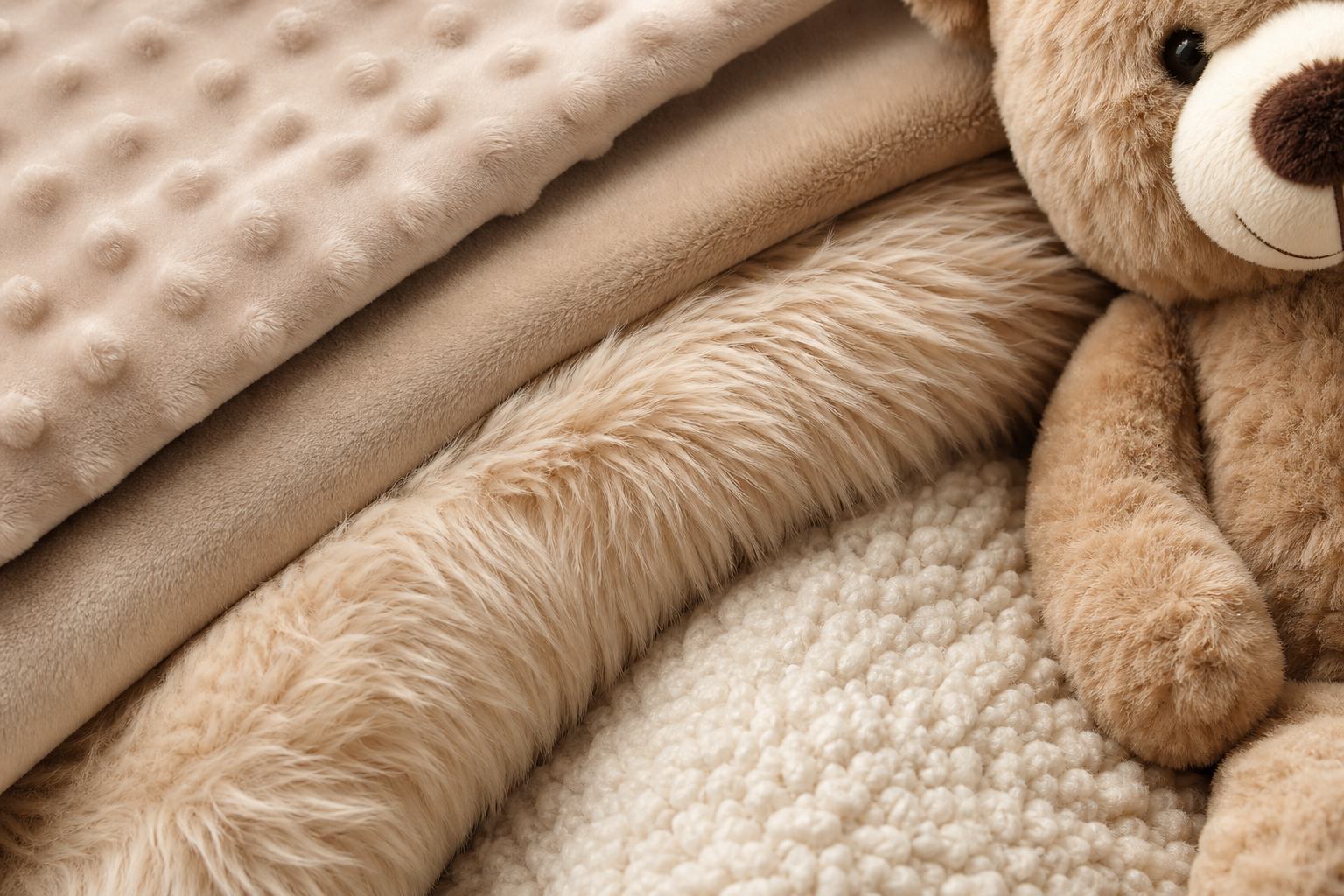
Close-up textures show the tactile variety of plush fabrics.
| Matériau | Feel | Best suited to |
| Minky | Silky and smooth | Baby lines and premium cuddle toys |
| Velboa | Short-pile and durable | Character designs and embroidered details |
| Faux fur | Long, fluffy pile | Realistic animals and statement gifts |
| Cotton or knit | Soft, structured, less fuzzy | Rag dolls, fabric books, and handmade designs |
| Recycled polyester | Varies by weave | Lower-impact fabric and filling options |
Fillings and special features
Polyester fiberfill is common because it is light, fluffy, and easy to shape. Cotton filling can give a natural feel, while foam adds structure. Recycled stuffing may reuse plastic materials, and some weighted plushies use beads or pellets inside secure inner pouches.
The amount of filling also changes the experience. A lightly filled softie feels floppy and relaxed. A fuller one looks rounder and holds its shape better. Dense fabric, neat seams, and balanced stuffing can make a toy feel more premium, even before you know its brand.
Lower-impact materials
Some soft toys now use recycled polyester, organic cotton, recycled filling, or plastic-free packaging. These choices can reduce material impact, but shoppers should still read labels carefully. Look for clear details about fiber content, recycled percentages, care instructions, and any certifications the brand names.
How Soft Toy Quality Affects the Experience
Construction matters as much as softness
A toy can look soft in a product photo and still feel disappointing in person. Quality comes from several small decisions working together: fabric weight, pile length, filling amount, pattern design, seam strength, and the way facial features are finished. A carefully made softie should feel balanced rather than lumpy, and it should keep its shape after regular handling.
Seams deserve special attention. More complex shapes need more panels, which means more seams and more places where stress can build. Well-placed stitching helps a toy hold its form at the ears, arms, legs, and neck. On plush animals, trimmed pile around the eyes and mouth can also make facial details easier to see.
Details change both style and use
Embroidery, appliqué, printed fabric, and safety eyes can create very different looks. Embroidered faces are flat, soft, and easy to recognize. Printed details can work well on simple designs. Appliqué adds dimension, while plastic eyes and noses can create a classic toy-like expression. The right feature depends on the design, the age grade, and how the toy will be used.
A plushie intended for a nursery may need simple, washable construction. A desk collectible can use more delicate trim, unusual fabrics, or decorative packaging. A large gift bear may benefit from fuller stuffing and a sturdy seated base. Looking beyond color and character helps you choose a soft toy that fits real life.
A quick quality checklist
- Feel the fabric or read the material description. It should match the softness you expect from the product photos.
- Check whether the filling sounds even and supportive, rather than hard, sparse, or unevenly packed.
- Look for neat seams, clear embroidered details, and securely attached features.
- Read the care label before choosing a toy for frequent use or for a young child.
- For gifts, consider whether the size, fabric, and style match the recipient’s room and habits.
Popular Types of Plushies and Softies
Classic animals and character toys
Teddy bears remain the best-known stuffed animals, but dogs, cats, rabbits, elephants, farm animals, woodland creatures, and zoo animals are equally familiar. They work well because their shapes are easy to recognize and can fit nearly any age or occasion.
Character plushies bring stories into daily life. They may represent a film, television series, game, comic, or book. Licensed items appeal to fans and collectors, but it is wise to buy them from established sellers. Product details, brand information, and reviews can help you avoid poorly made copies.
Food, fantasy, and novelty designs
Plush fruit, vegetables, desserts, drinks, and household objects make ordinary items funny and cuddly. Their appeal often comes from a bright color, a simple face, or a surprising shape. They are popular as gifts, desk décor, bag charms, and small collectible companions.
Fantasy designs offer another direction. Unicorns, dragons, dinosaurs, mermaids, aliens, and friendly monsters allow more color, texture, and imaginative details. Many are made for play, while limited releases or unusual artist designs may be displayed and collected.
Baby, weighted, interactive, and handmade softies
- Baby soft toys: Small, age-appropriate plush animals, loveys, comforters, and gentle sensory toys. Simple embroidered details are usually the safest choice for very young children.
- Weighted plushies: Toys containing extra beads, pellets, or other filling. Some people enjoy their more substantial feel, but age guidance and strong construction are essential.
- Interactive soft toys: Toys that make sounds, light up, move, or speak. They need careful attention to battery covers and cleaning instructions.
- Handmade and crochet softies: Amigurumi, fabric dolls, and one-of-a-kind creations. Secure stitching and firmly attached details matter, especially for children.
Why Soft Toys Matter to Children and Adults
Comfort, play, and familiar routines
Soft toys often carry emotional meaning because they become familiar over time. A favorite bear may be part of bedtime, long car rides, a first school day, or quiet time at home. Its softness and familiar appearance can make an ordinary routine feel more settled.
For children, soft toys also support imaginative play. A child can give a rabbit a name, invent a voice, create a story, or use it to act out a feeling. The toy becomes a simple, safe prop for storytelling and self-expression.
Why adults enjoy plushies
Adults collect plushies for many reasons: fandom, nostalgia, color, design, comfort, or home décor. A character plush can show affection for a favorite game or film. A large softie can add personality to a sofa or bed. A small one may stay on a desk as a cheerful visual break.
A familiar soft object can feel reassuring during rest, travel, or quiet moments. It is best understood as a comfort object, not a medical treatment. The value is personal: it may recall a memory, represent an interest, or simply make a space feel warmer.
How to Choose the Best Soft Toy
Start with age and intended use
The best soft toy depends on who will use it. For babies and toddlers, choose age-appropriate products with simple construction, embroidered facial details, strong seams, and no loose accessories. Preschool children often enjoy animals, soft dolls, and characters that support pretend play.
Older children may prefer a favorite character, a detailed animal, or an interactive toy. Teens and adults may care more about design, fandom, texture, display value, or a funny novelty theme. Collectors may prioritize condition, brand history, rarity, and original tags.
Choose the right size
- Small plushies are easy to carry, pack, place on a desk, or give as a casual gift.
- Medium soft toys offer a practical balance for everyday cuddling, play, and bedroom shelves.
- Giant stuffed animals create a memorable moment, but they need storage space and can be harder to clean.
Match the personality
A thoughtful choice often reflects an existing interest. Pick a favorite animal, color, character, hobby, or style. A dog lover may enjoy a realistic puppy. A space fan may prefer an alien or planet-shaped plushie. Someone who likes silky fabrics may love minky, while another person may prefer a fluffy faux-fur finish.
Buying a soft toy as a gift
Before buying, consider the occasion, recipient’s age, allergies or sensitivities, storage space, and cleaning needs. A personalized detail can turn a standard item into a keepsake. For a curated selection of gift-ready soft toys and plush ideas, visit https://www.stuffplush.com/.
How to Shop for Soft Toys Online
Read beyond the main photo
Online shopping makes it easy to fall in love with a softie at first glance. Still, a strong product page should offer more than a bright photo. Look for the toy’s measurements, materials, filling type, recommended age, care guidance, and close-up images of the fabric. These details help you understand the toy’s real size and texture.
Pay attention to measurements rather than labels such as small, medium, or giant. A 20-centimeter plushie may fit in a backpack, while a 60-centimeter bear may need a chair or shelf. When possible, compare the listed height to a familiar household item or look for a photo showing the toy in someone’s hands.
Choose trustworthy product information
Good listings explain what you are buying in plain language. They identify the outer material, list care instructions, and state whether accessories, sound boxes, or batteries are included. For licensed characters, the brand information should be clear. Reviews can also reveal how the fabric feels, whether the size matches expectations, and how well the toy holds up over time.
Be cautious about vague claims such as “ultra-soft” or “premium” when no fabric or care details appear. Those words are useful only when the product page also tells you what makes the toy different. Clear information is especially important when buying for babies, children, collectors, or someone with material sensitivities.
Avoid common gift-buying mistakes
- Choosing a toy only because it looks cute, without checking its size or age label.
- Buying an electronic plushie without confirming how it should be cleaned.
- Selecting a very large toy for a recipient who has limited storage space.
- Adding a long personalized message that may not fit neatly on the design.
- Forgetting to check delivery timing when the gift includes custom embroidery or printing.
Personalized Stuffed Animals: A Meaningful Gift Option
What can be personalized?
Personalized stuffed animals are made for one recipient or one moment. A seller may add a name, nickname, date, short message, photo, custom clothing, sound recording, or special color choice. These details are simple, yet they can make the toy feel much more personal.
Popular occasions
- Baby showers and new-baby gifts: Add a name, birth date, or short welcome message.
- Birthdays and Valentine’s Day: Use a nickname, favorite phrase, or meaningful date.
- Graduations: Include the school name, graduation year, or a brief congratulations message.
- Weddings and anniversaries: Add names, a wedding date, or a shared quote.
- Get-well and memorial gifts: Choose a gentle message that suits the recipient and occasion.
Keep the wording short enough to read easily. A first name, date, or seven-word message often has more impact than a long paragraph. Check spelling carefully before ordering, especially for embroidered text or permanent printed designs.
Soft Toy Safety and Care
Safety basics for babies and children
A soft toy can be safe when it matches the child’s listed age range and is in good condition. Follow the manufacturer’s label. For babies, select simple toys without loose buttons, detachable parts, long ribbons, exposed pellets, or damaged seams. Embroidered eyes and facial features are often a safer choice for very young children.
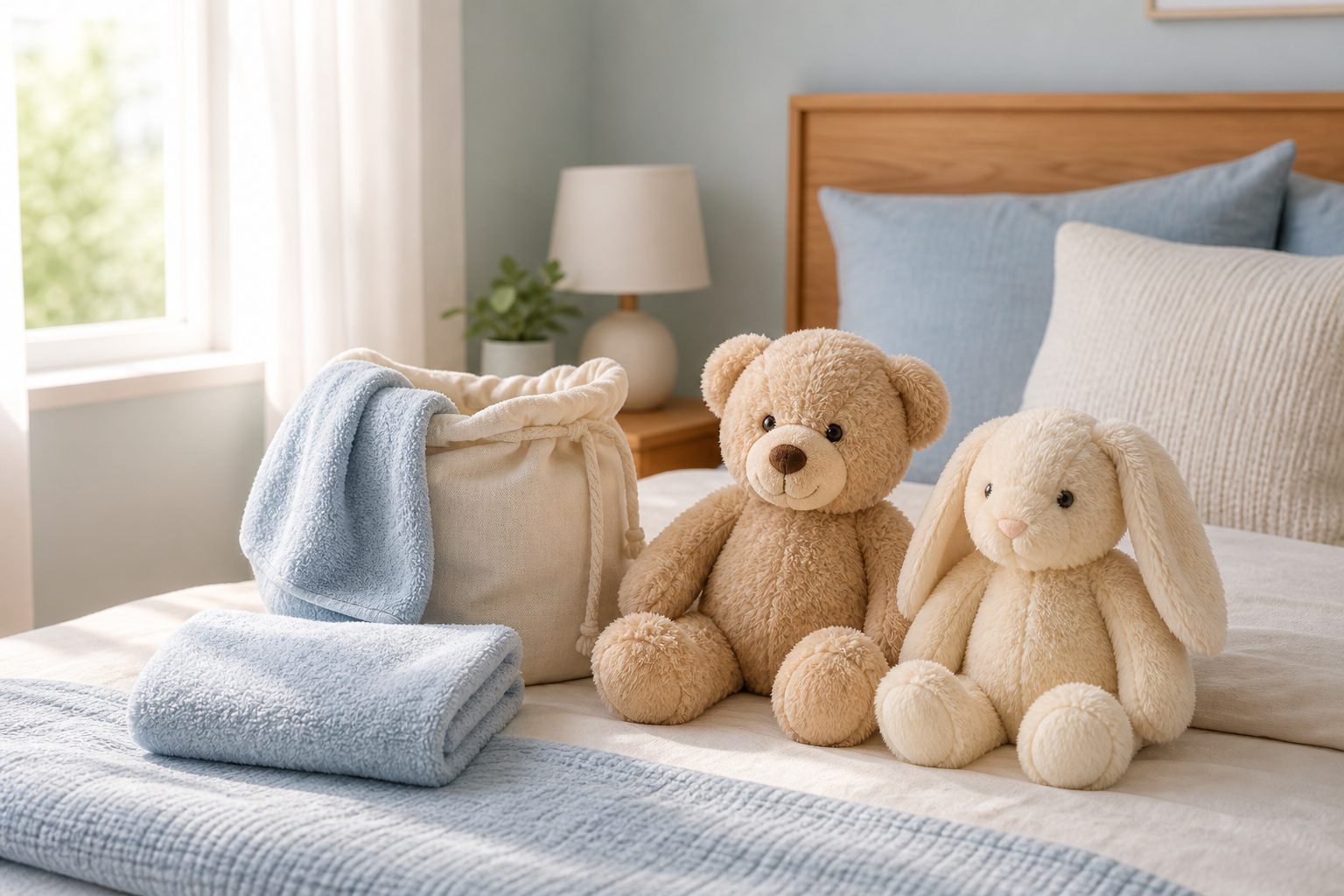
A calm care scene for plush toys, featuring a teddy bear, bunny, laundry bag, and towel.
Inspect well-loved toys regularly. Gently pull on seams, eyes, noses, and accessories. Check for holes, loose stuffing, weak stitching, or damaged fabric. Electronic soft toys need extra attention: keep battery compartments secure, and stop using the toy if the compartment is cracked or opens easily.
How to wash soft toys and plushies
Always begin with the care label. Some washable toys can go into a washing machine on a gentle, cold cycle using mild detergent. A mesh laundry bag or pillowcase can help protect the fabric and attached details. Do not machine-wash electronic toys unless the label clearly allows it.
Hand-washing is a good option for delicate or older plushies. Use cool water and mild detergent, squeeze gently, rinse well, and press out water inside a clean towel. Avoid twisting the toy. For toys that cannot be fully washed, surface-clean small marks using a damp cloth and a little mild soap.
Drying, storage, and small repairs
Air-drying is usually the safest approach. Reshape ears, arms, legs, and the body while the toy is still damp, then let it dry in a ventilated space. High heat can flatten pile fabric, shrink some materials, or damage glued features. Brush faux fur lightly after drying to restore its fluffiness.
Store soft toys somewhere clean, dry, and away from direct sunlight. Repair small tears early using matching thread and neat stitches. Replace or professionally repair any toy with exposed stuffing, loose features, mold, strong odors, heavy staining, or damaged electronic parts.
Soft Toy History, Culture, and Collecting
From early stuffed animals to modern plush trends
Commercial stuffed animals appeared in the late nineteenth century. Early examples used fabrics such as felt, velvet, and mohair, along with fillings like straw or sawdust. The teddy bear became famous in the early twentieth century and soon became a lasting symbol of childhood, gift giving, and collecting.
Soft toys also became part of popular culture. Mascots represent schools and teams. Character merchandise connects fans to stories. Social media now helps new designs travel quickly, creating collector communities around limited editions, plush keychains, and unusual artist-made characters.
What makes a plushie collectible?
Collectibility can come from a limited edition, official licensing, a well-known brand, a striking design, or a connection to a particular era. Condition matters. Clean fabric, firm seams, intact features, original tags, and packaging usually make a toy more appealing to collectors.
Store collectible plushies away from sun, moisture, dust, and pests. Use breathable storage when possible, and avoid stacking heavy items on delicate fabric. Keeping tags attached can support display and potential resale value. Removing them can create a cleaner look for everyday enjoyment, so the right choice depends on how you want to use the toy.
Questions fréquemment posées
What is another name for a soft toy?
Common alternatives include softie, plushie, stuffed animal, stuffed toy, cuddly toy, and plush toy.
Are soft toys only for children?
No. Children, teens, adults, fans, collectors, and gift recipients all enjoy them.
Quel est l'animal en peluche le plus populaire ?
Teddy bears are classic favorites, followed by dogs, cats, rabbits, and character plushies.
What is the best soft toy for a baby?
Choose a small, washable, age-appropriate toy with embroidered features and no loose parts.
Can you sleep with a stuffed animal?
Yes, if it is clean, intact, and appropriate for the user’s age.
How often should you wash soft toys?
Wash them according to use, exposure, visible dirt, and the care label.
Are personalized stuffed animals worth it?
They are often worth it when the occasion and sentimental value matter more than a standard gift.
Final Thoughts: Finding the Right Soft Toy
Soft toys are the broad category. Stuffed animals are usually animal-shaped, and plushies often emphasize a fuzzy plush fabric surface. The best choice depends on age, safety, softness, design, washable care, and personal meaning.
Whether you want a classic teddy bear, a character plushie, a weighted softie, or a personalized keepsake, choose one that suits the person and the moment. Explore thoughtful plush gifts and soft-toy inspiration at https://www.stuffplush.com/.