 French
 English
 German
 Russian
 Korean
 Spanish
Broderie, sérigraphie et transfert thermique pour les peluches à haute résistance au lavage : quelle technique de décoration résiste à la machine à laver ?
Here is a specification question that decides more plush returns than fabric choice or stuffing quality: what happens to your toy’s face after twenty wash cycles? For any plush program targeting children, babies, or daily-use products, the decoration method — embroidery, silk screen, or heat transfer — is a wash-durability decision first and an aesthetics decision second. Choose wrong, and month two brings the reviews: “the face cracked after one wash,” “the logo peeled off,” “eyes faded to gray.”
Au StuffPlush, we decorate plush across all three methods (plus hybrids) and wash-test every program before production. This guide compares the three methods specifically through the high-wash lens — what survives, what fails, at what cycle count, and why — then gives you the cost and decision framework to spec the right method into your next peluche personnalisée order.
The 30-Second Answer
| Criterion | Broderie | Silk Screen | Heat Transfer |
|---|---|---|---|
| Wash durability (cycles to visible wear) | 50+ cycles — effectively indefinite | 10–20 cycles on plush | 10–30 cycles; edge-lift after hot washes |
| On plush pile | Excels — stitches rise above pile | Poor — ink sits on flat surface, mottles on pile | Poor–moderate — only bonds on short, smooth pile |
| Feel | Raised, textured, premium | Stiff film layer | Slightly hard film, noticeable on large areas |
| Color range | 6–9 thread colors typical | Limited spot colors per screen | Unlimited (full CMYK) |
| Detail capability | Loses detail below ~3–5 mm | Medium (blurs on pile) | Excellent for fine lines on flat fabric |
| Setup cost | Digitizing fee $15–60/design | Per-screen fees, add up with colors | Transfer film per design, moderate |
| Per-unit cost trend | High at small qty, best value at 500+ | Low for few colors | Low–moderate, stable |
| Baby/children’s compliance | ✅ Safest (no chemicals at surface, no detachment) | ⚠️ Often flagged (ink compliance varies) | ⚠️ Adhesive layer concerns on some markets |
| Best role | Faces, eyes, logos — anything high-touch | Flat woven panels, promo plush, few colors | Flat short-pile panels, photo-style art, pillows |
The one-line version: for high-wash plush, embroidery wins on durability and safety; print methods win on color richness on flat surfaces — and the professional default is often a hybrid.
Why Wash Durability Behaves So Differently Across Methods
Understanding the failure physics explains every recommendation below:
Embroidery: Thread Doesn’t Crack
Embroidery stitches through the fabric and locks into it — the design is the surface, not a layer on it. Polyester embroidery thread holds color and integrity through 50+ machine wash cycles; there is nothing to peel, crack, or fade in normal use. The failure mode of embroidery is mechanical (thread snagging or fabric wearing before thread does), which is why stitch density and backing quality matter more than wash count. This is also why embroidery is the default for facial features on children’s plush: embroidered eyes cannot detach, crack, or chip the way plastic or printed features can — an inherent safety advantage for the under-3 market where detachable parts are prohibited.
Silk Screen: Ink on a Moving Surface
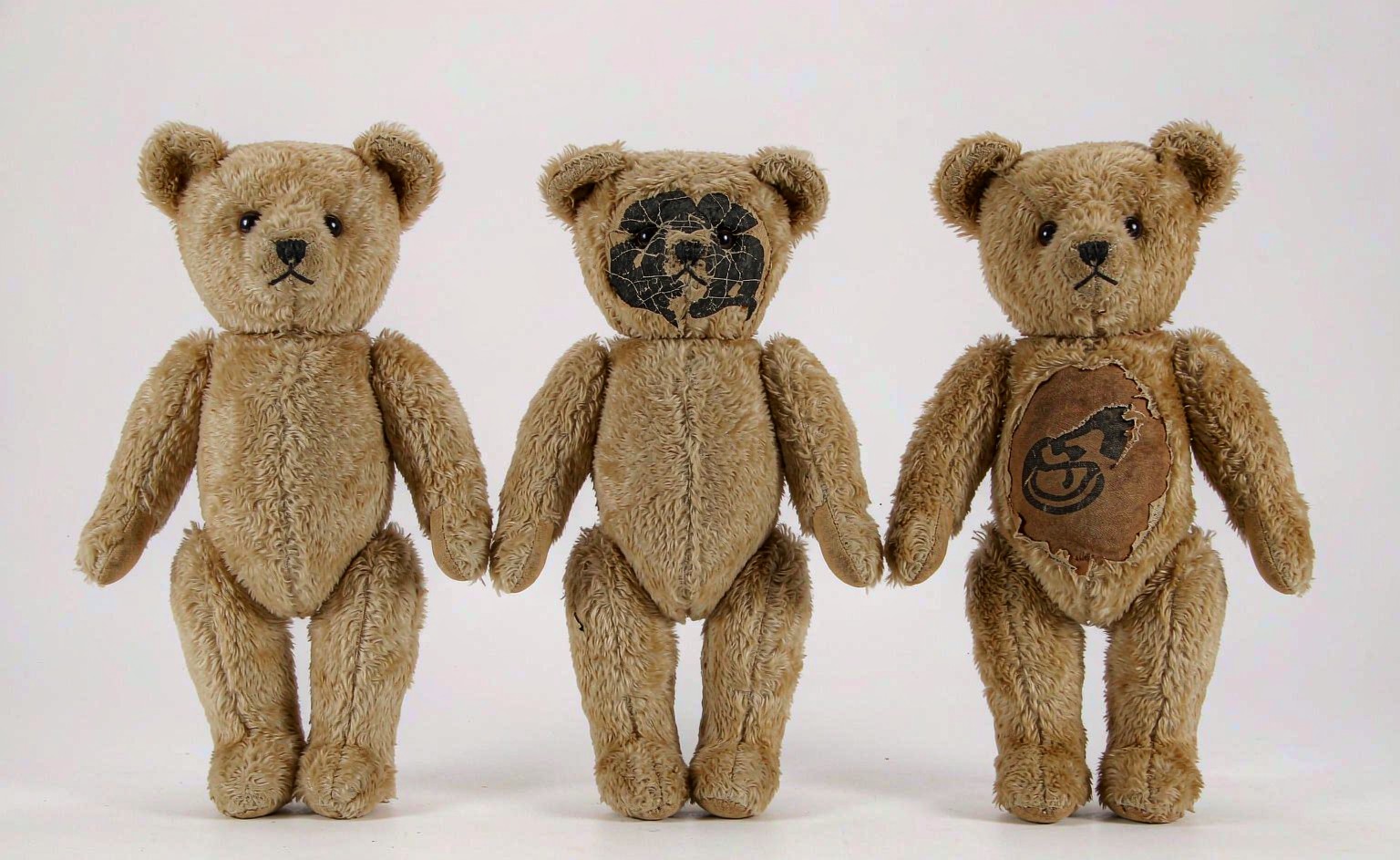
Screen printing lays ink on top of the fabric. On flat woven textiles, that ink flexes with the substrate and survives well. On plush pile, two problems compound: the ink sits on fiber tips rather than a solid surface (producing mottled, uneven coverage), and the soft fill underneath constantly flexes, micro-cracking the hardened ink film. Ten to twenty wash cycles is typical before visible cracking or fading on plush — sometimes sooner on high-pile fabrics.
Heat Transfer: A Bond That Washes Out
Heat transfer bonds a pre-printed film to fabric with heat-activated adhesive. On short-pile, smooth fabric with correct application, transfers survive 10–30 cycles acceptably. But the bond is the weak link: repeated hot washing and machine drying degrade the adhesive, producing edge-lift and peeling — the classic failure that starts at the design’s corners. On high-pile fabric, adhesion is partial at best from day one. Transfer is also temperature-sensitive: a hot tumble dry accelerates every failure mode.
The High-Wash Decision Matrix: Match Method to Product Reality
Different plush products live different washing lives. Spec the method to the actual use case:
| Product Type | Wash Reality | Recommended Method | Avoid |
|---|---|---|---|
| Baby / infant plush (0–36 months) | Frequent hot washes, chewing, drool | Embroidery features only; embroidered eyes mandatory | Plastic eyes, transfers near mouth zone, screen ink |
| Children’s play plush (3+) | Regular machine washes | Embroidery faces + appliqué/woven label details | Screen print on pile; transfers on high-contact zones |
| Corporate mascots / brand plush | Occasional surface cleaning | Embroidery logo + face | Large-area transfers (feel + peel risk) |
| Promotional giveaway plush | Short lifespan, light washing | Screen print acceptable (cost-driven) | — (durability less critical) |
| Plush pillows / cushions | Cover-removable, frequent washes | Sublimation/digital print on covers + embroidered accents | Transfers on high-flex zones |
| Collectible / display plush | Rarely washed | Any method — choose by aesthetics | — |
| Pet plush | Machine-washed, chewed, slobbered | Embroidery only; reinforced stitching | All print methods (saliva + abrasion kill them) |
Two rows deserve emphasis. Baby plush is not a print market: drool and saliva are chemically aggressive, hot washes are frequent, and regulations prohibit small detachable features — the combination makes embroidery the only defensible default for anything marketed at under-3s. Pet plush is the harshest wash environment in the industry: saliva, chewing abrasion, and frequent laundering destroy every surface-bonded decoration — our pet plush line specs embroidery exclusively.
Cost Comparison: The Real Numbers at Program Scale
Decoration cost has two components — setup (amortized across the order) and per-unit (scales with quantity) — which is why the “cheapest method” changes with order size:
| Cost Component | Broderie | Silk Screen | Heat Transfer |
|---|---|---|---|
| Setup / digitizing | $15–60 per design (per stitch count) | Per-screen fee per color ($20–50 each) | Transfer film production, moderate per design |
| Per-unit cost (small logo, 500 units) | ~$0.80–1.50 | ~$0.30–0.60 | ~$0.30–0.80 |
| Per-unit cost (same logo, 5,000 units) | ~$0.40–0.80 (setup amortized) | ~$0.20–0.40 | ~$0.25–0.60 |
| Large-area coverage | Expensive (stitch count explodes) | Cheap per color but mottles on pile | Moderate, but peel risk |
| Multi-color penalty | Moderate (more thread changes) | High (a screen per color) | None (full CMYK) |
| Effect on unit price | +$1–3 typical for logo | +$0.30–0.80 | +$0.50–2.00 |
The crossover logic: embroidery is the worst choice at 50 units and often the best at 5,000 — its setup cost amortizes and its wash-durability eliminates downstream replacement costs. For programs where durability failure means returns (children’s products), embroidery’s higher unit cost buys out of an entire failure category.
The Hybrid Strategy: What Professional Programs Actually Do
The most durable et best-looking plush rarely uses a single method. The professional defaults:
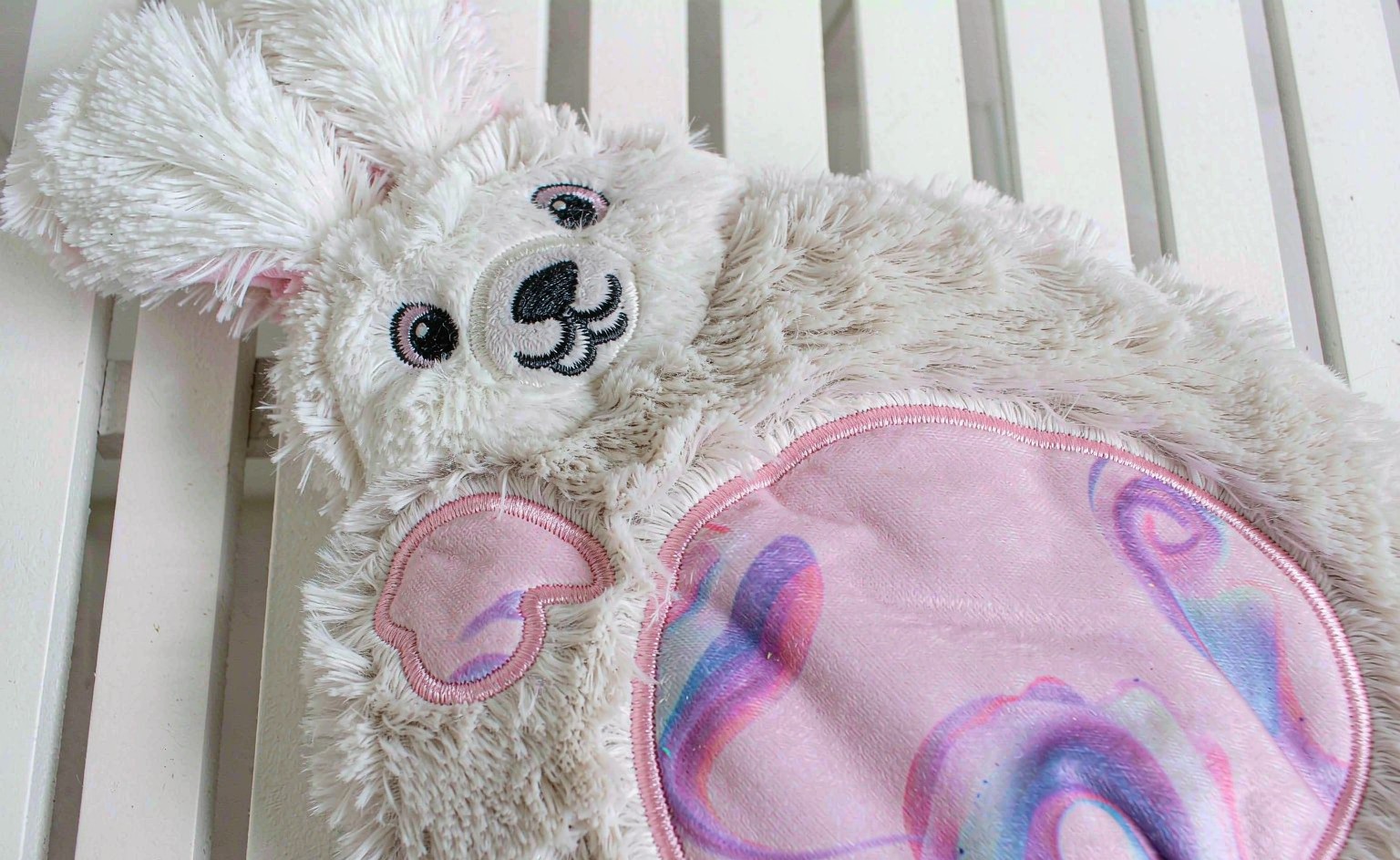
- Embroidered face + printed panel: character faces and safety-critical features embroidered; photo-style artwork sublimated on a flat cape, blanket, or belly panel that sees less abrasion
- Appliqué + embroidery outline: bold color blocks cut from fabric and satin-stitched down — more durable than print, softer than dense fill embroidery, and cheaper than full embroidery for large shapes
- Woven labels for fine text: brand names and care info below embroidery’s ~3–5 mm legibility floor go on a sewn-in woven label, which survives washing better than any print
The hybrid principle: put each decoration on the surface where its failure mode doesn’t apply — embroidery where hands and mouths go, print where eyes go, labels where small text goes.
Specifying Decoration Into Your Tech Pack: The 4-Line Template
Ambiguous decoration specs are where factories substitute silently. Copy this structure:
DECORATION SPEC — SKU: [name]
1. Eyes/nose/mouth: Embroidery, polyester thread, 3D puff optional, min 2,500 stitches, colors per Pantone [codes]
2. Chest logo: Embroidery, [stitch count], positioned [X]cm from collar, Pantone [code]
3. Belly art panel: Sublimation print on white short-pile velboa panel, CMYK, artwork file v[ref]
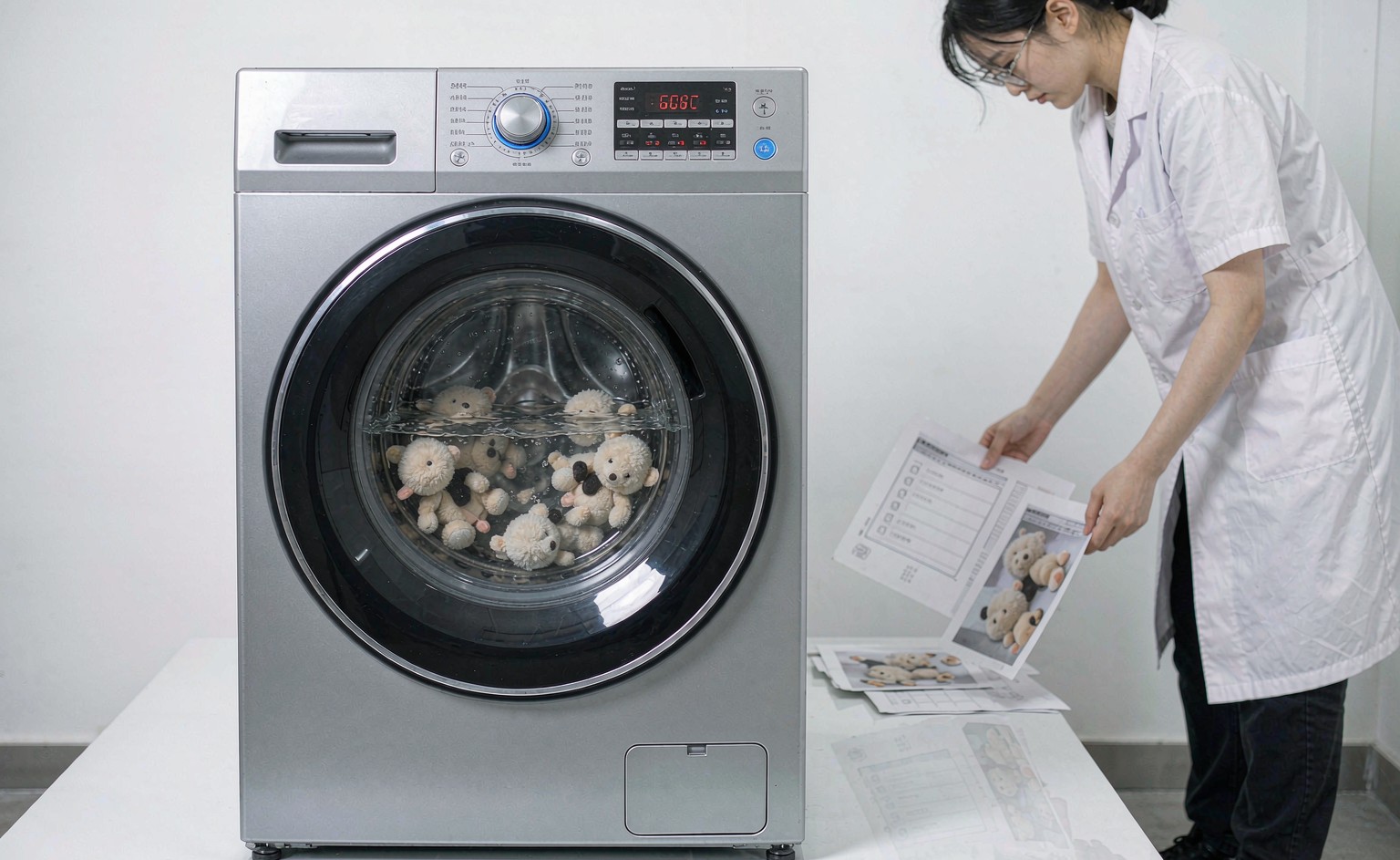
4. Wash validation: ISO 6330 [method] × 20 cycles — no peeling, no cracking, no color bleeding; documented with before/after photos
The wash-validation line is the one that matters most: it converts “durable enough” from an opinion into a testable acceptance criterion, performed on the production fabric before your goods ship.
How StuffPlush Decorates for Wash Durability
Au StuffPlush, decoration method selection is a design-stage decision in every custom plush program:
- In-house multi-head embroidery with digitizing handled internally — faces, logos, and safety-critical features never leave our floor
- Wash-test validation on production fabric before mass production: 20-cycle documented testing with before/after photos included in your pre-production package
- Baby-line discipline: our infant programs spec embroidery-only features as standard, aligned with safety standards requirements across US and EU markets
- Hybrid construction across categories — from oreillers en peluche with sublimated covers and embroidered accents to mascot programs with full embroidered branding
Questions fréquemment posées
Quelle méthode de décoration dure le plus longtemps sur les peluches ?
Embroidery, by a wide margin — quality polyester-thread embroidery survives 50+ machine wash cycles with no cracking, peeling, or fading because the stitches are locked into the fabric rather than sitting on it. Screen printing on plush typically shows wear at 10–20 cycles (ink mottles on pile and micro-cracks from filling flex), and heat transfer survives 10–30 cycles before adhesive degradation causes edge-lift. For any product that will actually be washed — children’s toys, baby plush, pet toys — embroidery is the durability default.
L’impression par transfert thermique peut-elle être utilisée sur du tissu pelucheux ?
Only on short-pile, smooth fabrics (velboa-type surfaces) and only for small-to-medium designs. The transfer’s adhesive needs a flat, even surface to bond; on high-pile fabrics it grips only the fiber tips and peels quickly. Even on suitable fabric, transfers should stay off high-flex, high-contact zones and out of hot-tumble-dry product care instructions. Our rule: transfers belong on flat panels (pillow covers, capes, belly panels), never on faces, paws, or anything a child chews.
Is silk screen printing safe for children’s plush?
It depends on the ink system and the market. Water-based, phthalate-free inks from compliant suppliers can pass EN 71-3 and CPSIA testing — but screen ink compliance varies widely across factories, and the printed layer adds a surface-chemistry element that embroidery simply doesn’t have. For under-3 products, most safety-focused manufacturers (including us) spec embroidery-only features as standard, eliminating the question entirely. For 3+ products, screen printing is acceptable with documented ink compliance — require the test report for your specific production run, not a supplier’s generic certificate.
Pourquoi mon usine facture-t-elle des frais de numérisation pour la broderie ?
Les frais de numérisation ($15–60 par motif, tarifés en fonction du nombre de points et de la complexité) couvrent la conversion de votre illustration en fichiers de broderie machine — planification des trajectoires, choix du type de point, réglages de densité et échantillonnage. Il s’agit d’une véritable étape d’ingénierie, et non d’un surcoût factice ; elle est généralement supprimée ou amortie lorsque les quantités de production sont importantes. Veuillez noter qu’un motif numérisé à une taille donnée ne se redimensionne pas sans perte de qualité : un logo de 5 cm numérisé pour une grande mascotte ne peut pas être simplement réduit pour un porte-clés — les détails fins risquent d’être perdus à l’agrandissement ; prévoyez donc une nouvelle numérisation si vous souhaitez utiliser le même motif à plusieurs tailles.
Combien de cycles de lavage devrais-je tester avant d’approuver une méthode de décoration ?
For children’s and daily-use plush, specify a documented 20-cycle wash validation (ISO 6330 or equivalent method matching your care label) before mass production, with before/after photos. Twenty cycles approximates a year or more of real household washing and reliably exposes the failure modes — transfer edge-lift, screen cracking, thread color bleed — while remaining cheap to run. For baby products, add a saliva/perspiration colorfastness test on the decoration area itself, since drool is chemically harsher than detergent.
Puis-je combiner les trois méthodes sur un seul peluche ?
Technically yes, but it’s rarely sensible beyond the standard hybrid (embroidered features + one printed panel + woven label). Each additional decoration method adds a production stage, a QC checkpoint, and a per-unit cost with diminishing aesthetic return. The practical ceiling: embroidery for everything safety-critical and tactile, one print method for your largest graphic surface, and a woven label for fine text. If your design wants more than that, the design is usually asking print methods to do embroidery’s job — re-examine the artwork instead.
Conclusion: Spec for the Washing Machine, Not the Shelf
On the retail shelf, all three decoration methods can look identical. In the washing machine, they diverge fast — and the divergence shows up in your reviews, returns, and reorder rates. The specification logic is straightforward: embroidery where hands, mouths, and machines go; print where flat fabric and eyes go; labels where fine text goes. Write the method, the stitch counts, and the wash-validation requirement into the tech pack, and the decoration stops being a sampling gamble.
Au StuffPlush, we help buyers make this call at the design stage — with in-house embroidery, documented wash validation, and honest per-method cost math for your order quantity. If you are planning a high-wash plush program — baby line, pet line, or any product that will meet a washing machine — nous contacter with your artwork, and we will return a decoration spec with the durability data attached.