 French
  English
  German
  Russian
  Korean
  Spanish
If you are importing or sourcing plush toys, normes de sécurité des peluches are not optional paperwork — they are the difference between smooth customs clearance and a seized shipment. In the United States, the CPSC enforces mandatory third-party testing for children’s products; in the European Union, toys cannot be sold without CE marking backed by EN71 compliance. Plush items are classified as children’s toys even when they are intended as corporate giveaways or decorative items, which means the same rules apply. This guide gives importers and brand owners a clear roadmap: which normes de sécurité des peluches apply in each market, what testing and documentation you need, and how to verify that your factory actually delivers a compliant product. Start by reviewing how a certified custom plush manufacturer runs compliance, and see our animaux en peluche range as an example of standards-first production.
Why Compliance Planning Must Start Before Sampling
The biggest mistake importers make is treating safety as an afterthought. Plush toy safety standards depend on your destination market, the intended age group, the product’s features, and even its packaging. If you change any of those after sampling, you may need to re-test everything.
Plan compliance around the exact finished product. Confirm where you will sell, who the toy is for, and whether it is a children’s toy, collectible, or decor item. Changing the classification late in a project affects materials, accessories, warnings, and documentation — and each change can restart the testing clock. Treating normes de sécurité des peluches as a line item in the budget, rather than an afterthought, is the single cheapest investment an importer makes.
The Plush Toy Safety Standards That Matter by Market
| Market | Standard | Mandatory mark / document | Core focus |
|---|---|---|---|
| États-Unis | ASTM F963 (via CPSIA) | Children’s Product Certificate (CPC) | Small parts, lead <90 ppm, phthalates, flammability, tracking label |
| Union européenne | EN71 Parts 1–3 | CE mark + Declaration of Conformity | Mechanical safety, flammability, heavy-metal migration |
| United Kingdom | EN71 + Toy Regulations 2011 | UKCA mark | Mirrors EN71, UK approved-body auditing |
| Australia / NZ | AS/NZS ISO 8124 | Distributor details, age grading | Choking hazards, toxic limits |
| Canada | CCPSA SOR/2011-17 | Health Canada compliance | Sharp points, decibel limits, seam strength |
Pour ASTM F963 stuffed animals, the standard covers mechanical and physical properties — pull-force tests on eyes, noses, buttons, and accessories to prevent small-part detachment — plus stuffing material safety, flammability, and chemical restrictions. ASTM F963-23 is the mandatory version for toys manufactured after April 2024. For CPSIA plush toys, compliance means third-party lab testing by a CPSC-accepted laboratory and a formal Children’s Product Certificate issued by the importer.
In Europe, EN71 certified plush toys must satisfy EN71-1 (mechanical and physical properties), EN71-2 (flammability, which is stricter for soft toys), and EN71-3 (migration of 19 chemical elements). CE marking is the manufacturer’s declaration that all applicable EU requirements are met, backed by a technical file and Declaration of Conformity.
What Testing Actually Happens on a Plush Toy
Behind every plush toy safety certification sits a specific set of physical and chemical tests. Knowing what they check helps you brief your factory and read test reports critically.
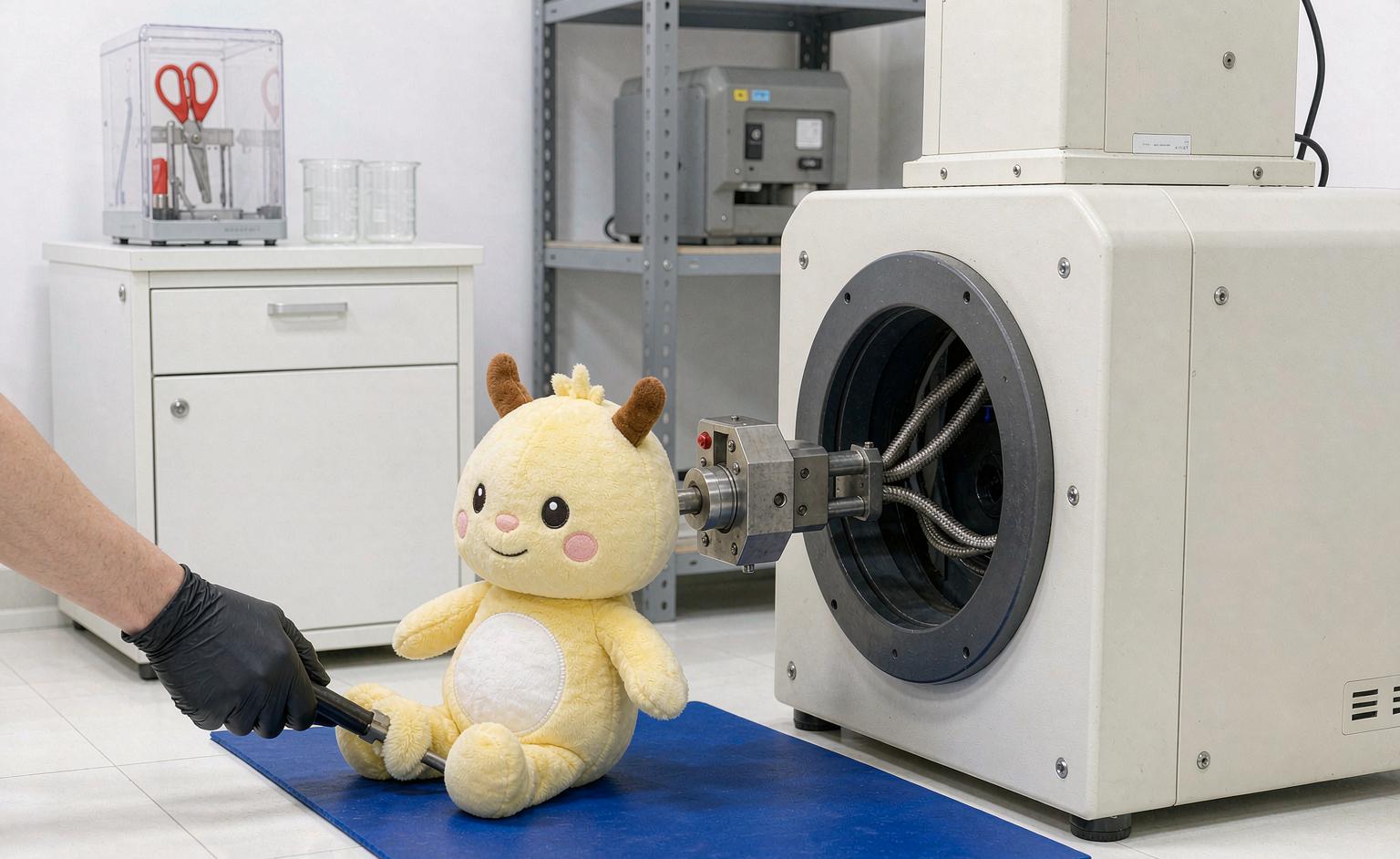
- Small parts and pull tests. Attachments such as eyes and noses must withstand a 15-pound (70 N) pulling force for 10 seconds. Any part that detaches is placed in a 1.25-inch cylinder; if it fits entirely inside, it is a choking hazard and the product fails.
- Seam strength. Seams at limbs, ears, and tails are tension-tested to ensure they do not burst under normal play.
- Flammability. Fabrics must pass rate-of-burn tests; EN71-2 is generally considered the stricter benchmark.
- Chemical migration. Surface coatings and fillings are tested for lead, cadmium, chromium, and phthalates. CPSIA limits total lead in coatings to 90 ppm; regulated phthalates are capped at 0.1%.
- Metal detection and needle checks. Broken sewing needles are a real risk in soft toys. Compliant factories run every piece through electromagnetic metal detection (calibrated around 0.8 mm) with documented logs.
- Age grading. For children under 36 months, every component is a potential small part; for 3+ toys, warning labels may mitigate small-part risk if the label is present and legible.
The Documents Every Importer Needs
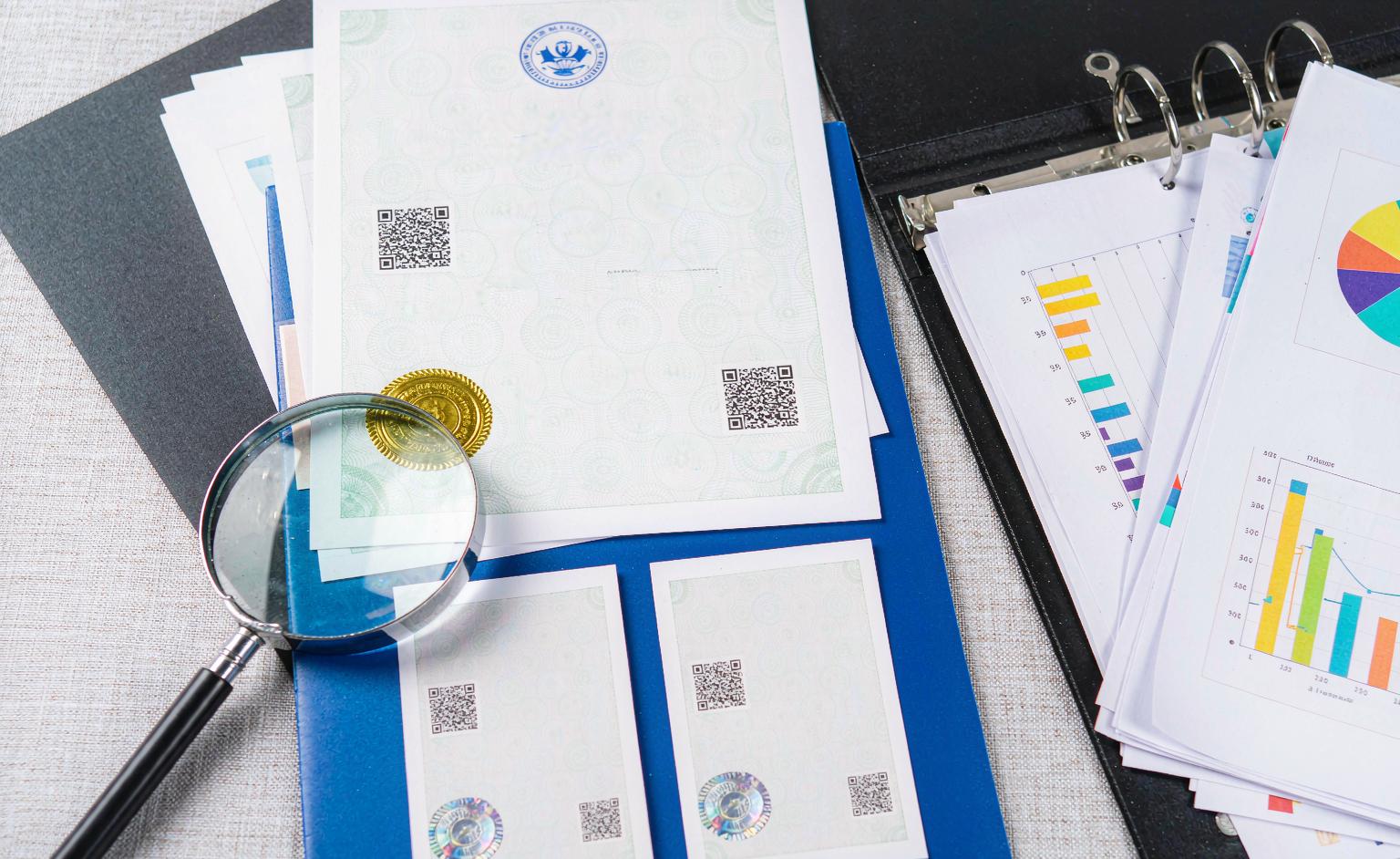
Le children’s product certificate (CPC) is the single most important US document. It is issued by the importer or domestic manufacturer and declares that the product complies with ASTM F963 and other applicable rules, referencing a test report from a CPSC-accepted lab. The CPC must cover the exact SKU and production batch being shipped — not a similar product from two years ago.
For the EU, you need a Declaration of Conformity (DoC) and technical documentation kept on file by the manufacturer or EU importer, plus CE marking on the product or packaging. UK sales require UKCA marking and a UK importer. Packaging is part of the puzzle too: permanent tracking information, age grading, warnings, and importer details must appear where your market requires them. Plastic polybags used with plush toys must be thick enough (or perforated) to avoid suffocation risk, with warnings in the destination language. Every one of these documents exists to prove one thing: that your product meets the normes de sécurité des peluches of the market where it will be sold. Build the normes de sécurité des peluches check into every milestone — sample approval, pre-production, and final QC — so no shipment ever leaves without its paperwork.
How to Read a Test Report Like a Professional
Not all test reports are equal. Before you accept one, ask:
- Does the report identify the same product or a justified product family?
- Do the materials, colors, accessories, and age grading match your order?
- Is the destination market and applicable standard clearly stated?
- Is the laboratory accredited and, where required, CPSC-accepted?
- Are the report date, applicant, manufacturer, and model details consistent?
- Can the document be linked to the goods, labels, and production batch?
A factory that exports to your target market already maintains a library of plush toy safety certifications by SKU. Ask which labs they use — SGS, Intertek, TÜV, and Bureau Veritas are the most widely accepted — and request the full report set before shipment, not after.
Compliance Details That Change the Test Plan
| Product feature | Compliance concern | Action before sampling |
|---|---|---|
| Plastic eyes or noses | Small parts, attachment strength | Confirm age grading; embroidered features are safer |
| Key rings, metal clips | Sharp points, coatings, attachment | Specify hardware and market at quotation |
| Sound or light modules | Electrical, battery, sound-level risks | Review module and battery compartment |
| Magnets | Size, flux, secure containment | Product-specific risk assessment |
| Long pile or loose fill | Flammability, cleanliness | Approve material specs before testing |
| Printed packaging | Warnings, traceability, importer info | Review compliance copy before finalizing |
Pour EN71 certified plush toys and every other market, remember that a report must match the actual product. A generic “certificate” that does not identify your SKU, materials, and batch is not evidence of compliance — it is a warning sign.
How Long Does Testing Take?
Budget for the timeline. Prototype pre-screening (raw fabrics, eyes, threads, and stuffing) can run in parallel with sampling. Full third-party testing of a production batch typically takes 10–14 days once samples are dispatched to the lab, and you should run it before bulk production rather than after. Testing is where normes de sécurité des peluches stop being paperwork and become a production reality. Plan the calendar so test reports are in hand before your cargo reaches customs — border authorities and large retail buyers will ask for them.
Building Compliance Into Your Factory Relationship
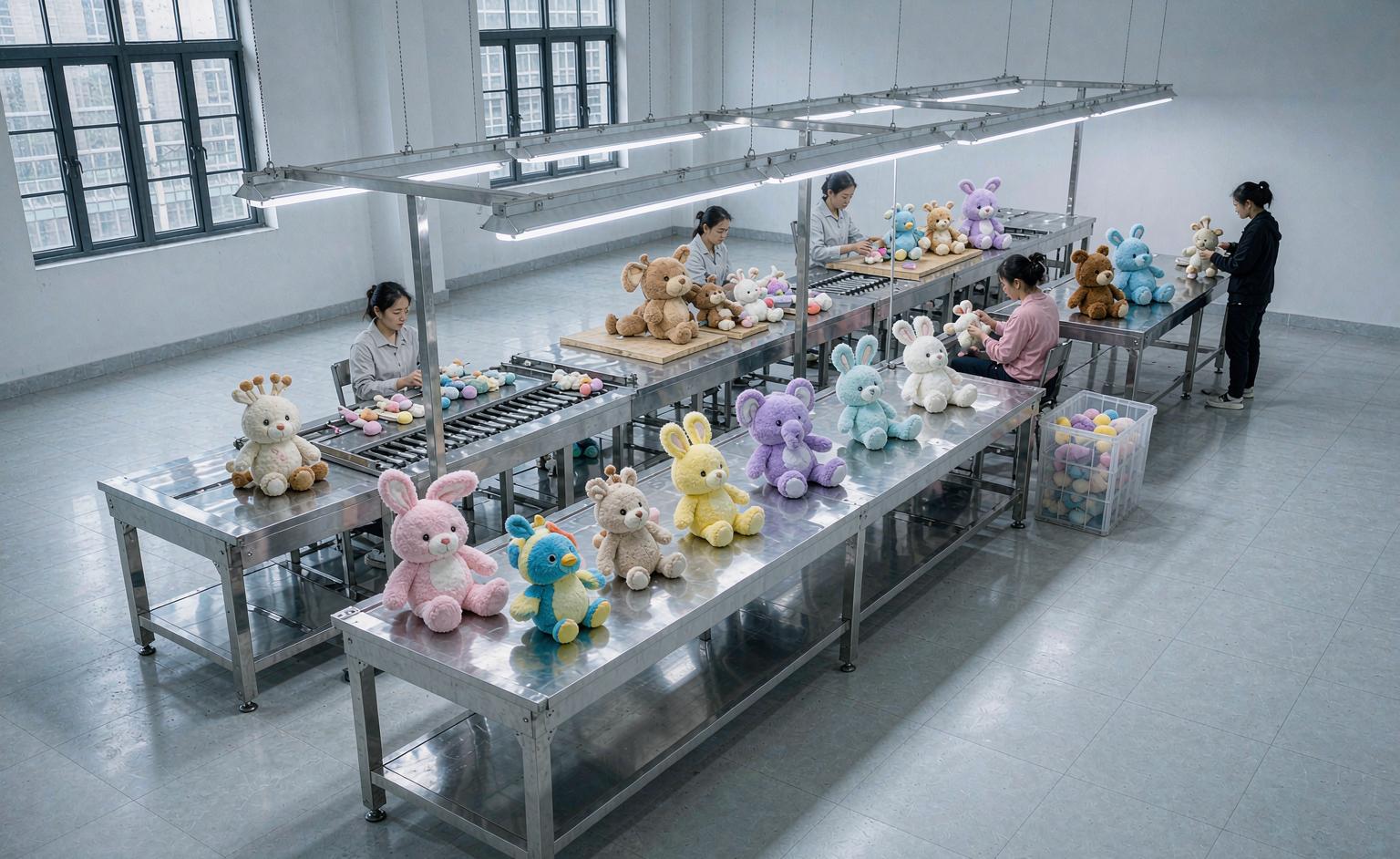
The most reliable path to a compliant product is a factory that treats normes de sécurité des peluches as part of its daily process. Ask your manufacturer: Do you hold OEKO-TEX fabric certifications? Can you arrange third-party testing on my production batch? Have you exported to my target market before, and can you provide sample CPCs or DoCs? Do you apply pull-force testing and metal detection as standard QC?
A direct factory partner is also your best defense on documentation. StuffPlush is a custom plush manufacturer with 15+ years of OEM and ODM experience producing for global brands including Disney, Target, McDonalds, and Primark, building every order to ASTM, CPSIA, EN71, and CE standards with non-toxic, hypoallergenic materials and embroidered (never glued) features. Our oreillers en peluche, porte-clés en pelucheet jouets en peluche pour les vacances programs all ship with the compliance documentation your market requires.
Common Compliance Pitfalls
Even experienced importers trip on the same handful of mistakes. The first is accepting a generic certificate that does not identify the exact SKU, materials, and batch — a report for a “similar” product is not compliance for yours. The second is changing packaging or labels after compliance review, which can invalidate warnings, tracking info, and importer details. The third is ordering CPSIA plush toys without confirming the age grade first: a toy that is fine for a 5-year-old may fail for an 18-month-old, and the age grade drives the entire test plan. The fourth is treating normes de sécurité des peluches as a factory problem when the documentation burden — the CPC, the Declaration of Conformity, the importer address — sits with the buyer. And the fifth is skipping batch-level testing: material suppliers change, dyes drift, and a report from last year does not cover this shipment. Budget the timeline and the documentation into your project plan from day one, and most of these pitfalls disappear before they ever reach customs.
Questions fréquemment posées
What are the main plush toy safety standards? The main standards are ASTM F963 in the United States (mandatory under CPSIA), EN71 Parts 1–3 in the European Union, UKCA under the UK Toy Regulations, AS/NZS ISO 8124 in Australia and New Zealand, and CCPSA in Canada. Plush toys must also meet flammability, heavy-metal, and small-parts requirements set out in those standards.
What is CPSIA and does it apply to plush toys? CPSIA is the Consumer Product Safety Improvement Act, the US law that makes ASTM F963 mandatory for children’s products. Plush toys intended primarily for children 12 and under must be tested by a CPSC-accepted third-party laboratory and covered by a Children’s Product Certificate, with permanent tracking information on the product and packaging.
Do plush toys need EN71 certification for Europe? Yes. Plush toys sold in the EU must satisfy EN71-1 (mechanical and physical properties), EN71-2 (flammability), and EN71-3 (migration of chemical elements), and carry CE marking backed by a Declaration of Conformity and technical file. Note that the EU Toy Safety Regulation is transitioning, with main requirements applying from August 2030.
What is a Children’s Product Certificate (CPC)? A CPC is a certificate issued by the importer or domestic manufacturer declaring that a children’s product complies with applicable CPSC rules, referencing test reports from a CPSC-accepted laboratory. It must identify the exact product, batch, and standards, and it must be available electronically for customs and retailers.
How long does plush toy safety testing take? Full third-party testing of a production batch typically takes 10–14 days once samples reach the laboratory. Prototype pre-screening of raw materials can run in parallel with sampling. Plan so test reports are available before bulk production and well before your shipment reaches customs.
Can the manufacturer provide test reports for my market? A factory that already exports to your target market should maintain a library of test reports by SKU and be able to arrange batch-specific third-party testing with accredited labs such as SGS, Intertek, TÜV, or Bureau Veritas. Always confirm the report matches your exact product, materials, and production batch.
Conclusion
Getting normes de sécurité des peluches right is a process, not a one-time check: choose your market and age grade early, brief the factory before sampling, verify the test plan, read reports critically, and keep the documentation for every batch. The payoff is a product that clears customs, satisfies retail buyers, and protects children — and a brand that does not have to learn compliance the hard way. For a standards-first partner, review our animaux en peluche et sacs à dos en peluche collections, explore jouets en peluche pour les vacances et talking plush toys to see compliance in practice, and reach out through About StuffPlush when your brief is ready for a compliance-first quote.