 Spanish
  English
  German
  French
  Russian
  Korean
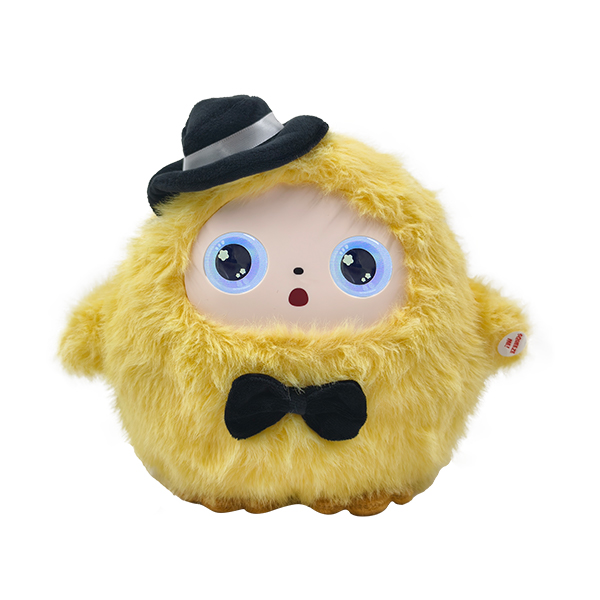
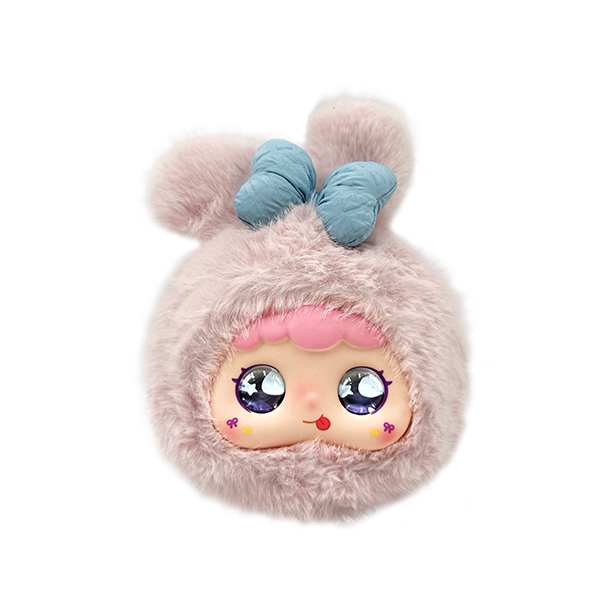
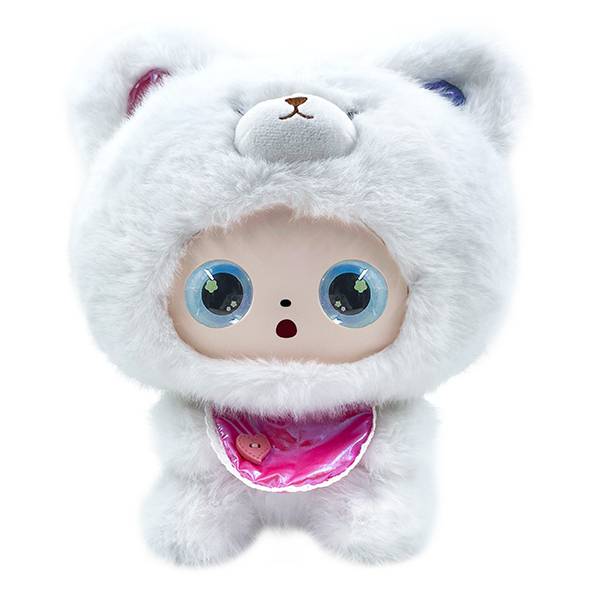
Dogs and their stuffed animals share a bond that is both heartwarming and scientifically fascinating. Whether it’s a Golden Retriever gently carrying a teddy bear or a Terrier frantically disemboweling a plush squirrel, these behaviors are rooted in deep-seated evolutionary traits.
For pet brand owners and retailers, understanding Why do dogs like stuffed animals? is not just a curiosity—it is a critical business insight. By analyzing canine behavior toys and the underlying canine psychology, companies can move beyond generic offerings to develop high-performance products that satisfy a dog’s natural urges while meeting owner expectations for safety.
Como líder Custom Stuffed Animal Manufacturer, StuffPlush (Holly Uwill) integrates these psychological drivers into our product development process. In this guide, we explore the biological roots of plush toy obsession and how these insights inform professional dog toy manufacturing.
The Biological Root: The Ancestral Prey Drive
The most common reason dogs are drawn to plushies is their Prey Drive. Even the most pampered lap dog retains the predatory instincts of their wolf ancestors.
Why Squeakers Trigger the Hunting Instinct
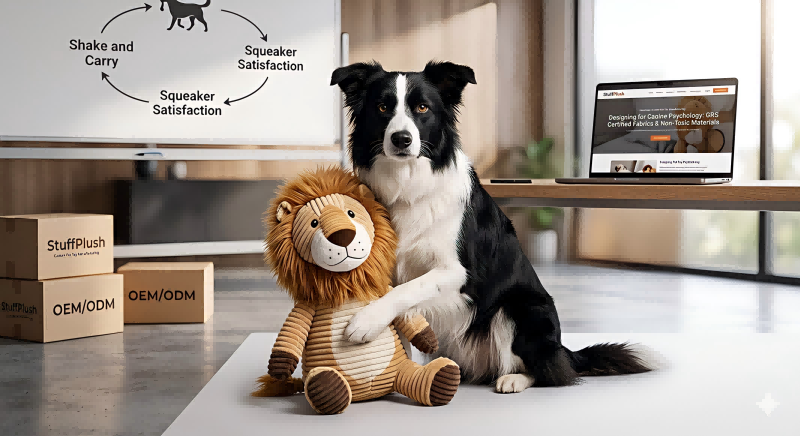
Most high-quality stuffed toys contain a Squeaker. To a dog, the high-pitched “yip” of a squeaker mimics the sound of a small animal in distress. This Squeaker satisfaction provides immediate positive reinforcement, completing a “successful hunt” in the dog’s mind.
The Satisfaction of the “Shake and Carry” Behavior
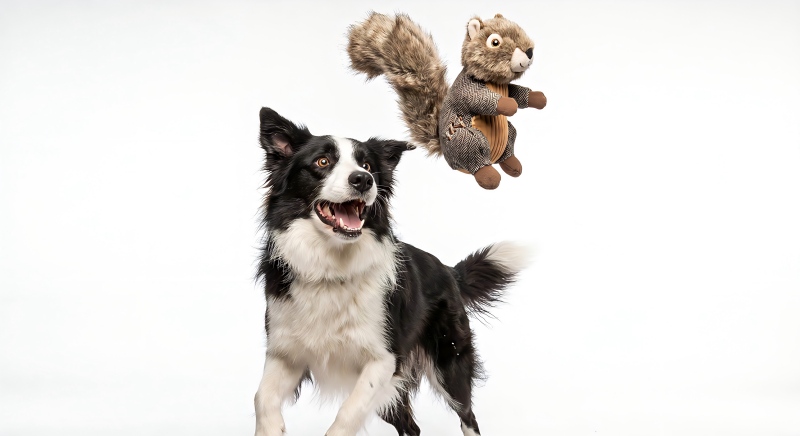
When a dog vigorously shakes a toy, they are practicing “prey-shaking,” a move used by wild canines to incapacitate small game. Designing toys with “floppy” limbs or elongated bodies—such as Custom Plush Backpacks or long-bodied squirrels—catches this instinct perfectly.
| Característica | Psychological Trigger | Recommended Design Element |
| Squeaker | Prey Drive / High-pitched sound | Encased safety squeakers with varying tones |
| Soft Limbs | “Shake and Carry” behavior | Unstuffed or lightly stuffed extremities |
| Furry Texture | Mimicking animal fur | Alta GSM fabrics (400+) for realistic feel |
Emotional Comfort: Plushies as a “Security Blanket”
Beyond the hunt, many dogs use stuffed animals as a Comfort object. This is especially prevalent in breeds prone to Separation Anxiety.
Reducing Anxiety with Soft Textures
A soft, plush surface provides tactile comfort. This is known in psychology as a “transition object.” When an owner is away, a dog may cuddle with their favorite toy to feel secure. At StuffPlush, we focus on Soft mouthfeel, using premium Non-toxic materials that are gentle on a dog’s gums and palate.
Scent Retention: Making Plushies a Long-term Companion
Dogs live in a world of smell. A high-quality fabric that has excellent Scent retention properties can hold the scent of the home or the owner, making the toy an indispensable emotional tool. Our customization options include specialized fibers that help maintain these comforting scents even after multiple uses.
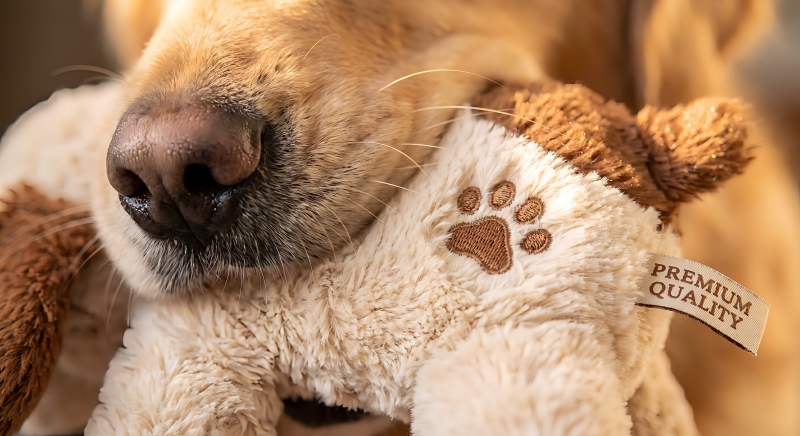
The Maternal and Social Bond
Interestingly, many female (and some male) dogs exhibit a “mothering” instinct toward their toys.
Why Dogs “Nurse” Their Stuffed Animals
Some dogs will carry their plushies around, sleep with them, and even “groom” them. This is often linked to the Maternal instinct. For these dogs, Durabilidad is less about resisting a “kill” and more about longevity. They require toys that are Lavable a máquina but maintain their shape and softness over time.
Manufacturing Perspective: Designing Toys Dogs Truly “Love”
From a Professional dog toy manufacturing standpoint, creating a “bestseller” requires balancing these psychological needs with industrial engineering.
Sensory Feedback: The Key to Engagement
A toy that only squeaks might lose its charm. In 2026, the trend is moving toward Sensory feedback—combining Squeaks, crinkles, and textures.
-
Crinkle Paper: Mimics the sound of rustling leaves or grass.
-
Varying Textures: Combining corduroy, plush, and canvas provides a complex tactile experience.
Mouthfeel: Selecting the Right GSM Fabrics
Not all plush is created equal. We prioritize High-GSM (Grams per Square Meter) fabrics because they provide a “fleshy” resistance that dogs find satisfying to bite. This Soft mouthfeel is a primary driver for repeat play.
Safety & Durability: The B2B Quality Benchmark
While a dog cares about the “fun,” a B2B buyer cares about Compliance y Durabilidad.
Reinforcement Techniques for Aggressive Chewers
For brands targeting “power chewers,” standard plush won’t suffice. We implement:
-
Double-Stitched Seams: Preventing the “pop” during a heavy shake.
-
Internal Mesh Lining: Adding a second layer of defense.
-
Filling/Stuffing safety: Using hypoallergenic, non-toxic poly-fill that is safe even if a small amount is accidentally swallowed (though we always advise supervised play).
Global Standards: ASTM, CE, and Beyond
Every product we manufacture at StuffPlush undergoes rigorous testing to ensure they are High-quality custom dog toys. We strictly adhere to:
-
ASTM F963 (USA)
-
EN71 (Europa)
-
Non-toxic materials certification for dyes and fibers.
Market Data: Why Plush Toys Dominate the Pet Industry
According to recent 2026 market analysis, plush toys remain the #1 category in the pet toy sector.
| Category | Market Share (2026 Est.) | Growth Driver |
| Plush/Stuffed Toys | 42% | Comfort object demand & Personalización |
| Rubber/Chew Toys | 28% | Durabilidad & Dental Health |
| Interactive/Tech Toys | 18% | AI smart plush toys & Connectivity |
| Rope Toys | 12% | Tug-of-war behaviors |
StuffPlush Insight: Our Q1 2026 data showed a 91.8% increase in valid leads specifically for animales de peluche personalizados that feature mixed textures, proving that sensory complexity is what modern retailers are looking for.
FAQs: Common Concerns for Pet Brand Owners
Can plush toys be machine washed without losing scent?
While washing removes physical dirt, high-quality synthetic fibers used in Professional dog toy manufacturing retain micro-scents that dogs can still detect. We recommend cold water cycles to maintain fabric integrity.
What are the safest filling materials for pet toys?
We exclusively use clean, Non-toxic materials like virgin polyester fiberfill. For certain eco-friendly lines, we offer GRS-certified recycled fill, which meets both safety and sustainability standards.
How do I choose between a “prey” toy and a “comfort” toy for my brand?
Most successful brands offer a mix. A Prey Drive focused toy should have Squeaker satisfaction, while a comfort toy should focus on Soft mouthfeel and size-appropriateness.
Conclusion: Building a Scientifically-Backed Pet Brand
Understanding Why do dogs like stuffed animals? allows you to move from selling a “commodity” to selling a “solution” for pet owners. Whether it’s satisfying the Prey Drive or providing a Security blanket, the design must be rooted in Canine psychology.
StuffPlush (Holly Uwill) is more than just a Peluches Fabricantes; we are your partner in Product development. With our Low MOQ of 500pcs and deep expertise in Compliance, we help you launch toys that dogs love and owners trust.
Ready to leverage canine psychology for your next product line?
Contact StuffPlush today for a custom quote!
References & Sources:
-
American Kennel Club (AKC): “Why Do Dogs Like Squeaky Toys?”
-
Canine Behavior Journal: “The Role of Comfort Objects in Domesticated Dogs.”
-
StuffPlush Q1 2026 Internal Conversion Data: “Trends in Custom Pet Toy Inquiries.”