 Spanish
  English
  German
  French
  Russian
  Korean

For anyone sourcing custom plush, plush toy materials are not a cosmetic detail — they are a performance and risk decision. The outer fabric and inner filling determine how the toy feels, whether it keeps its shape, whether it passes safety testing, and whether bulk production actually matches your approved sample. Industry experience suggests that the majority of plush quality complaints trace back to material choices rather than workmanship. This guide gives B2B buyers, brand owners, and product developers the vocabulary and the decision framework to specify plush toy materials with confidence — from fabric families and filling options to the technical parameters that separate a premium plush from a floppy one. Explore how a custom plush manufacturer applies these choices in production, and see the finished results in our animales de peluche range.
Why Materials Decide the Outcome Before Production Starts
Plush toy materials account for most of the downstream result. They control the first impression a customer gets when they touch the toy, the way the toy stands and holds its silhouette, and whether the product clears standards such as EN71 or ASTM F963. They also control cost: premium fabrics and finer fillings cost more, and a “cheaper” quote on plush toy materials almost always signals a compromise in materials, craftsmanship, or compliance.
The most practical way to think about plush toy materials is as a pair of decisions that must be made together. Within plush toy materials, fabric gives the toy its outer personality while filling gives it its inner life. Choose them as a system, not as two independent line items.
Plush Fabric Types: The Outer Personality
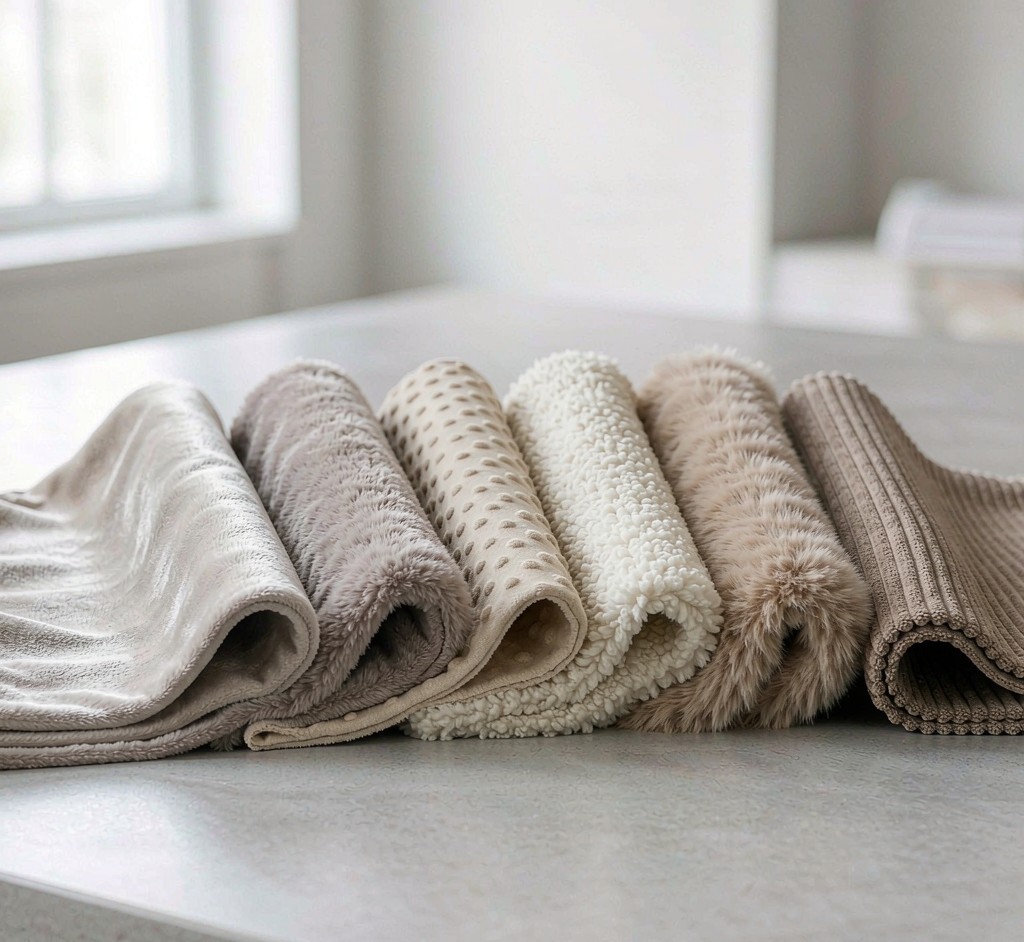
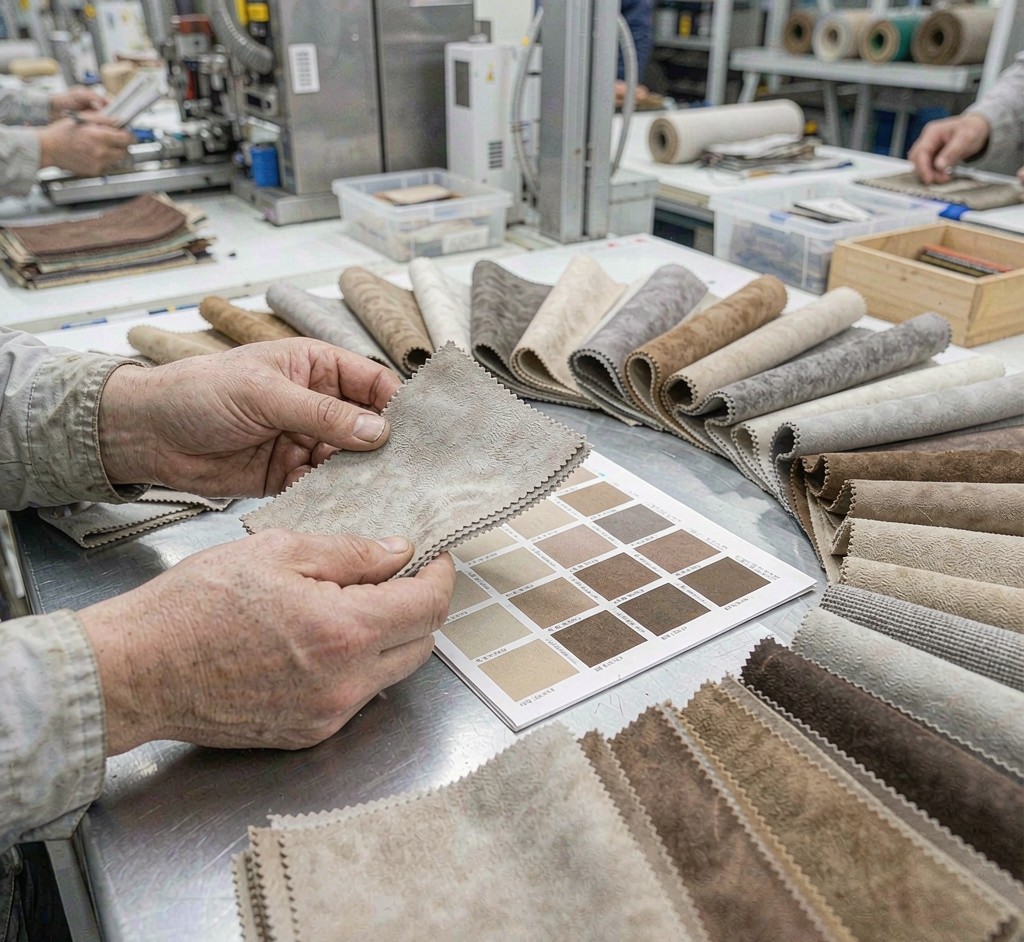
The fabric is the primary sensory interface between the toy and the customer. Hundreds of fabrics exist, but a handful are the workhorses of the industry. Knowing their character helps you match the material to the design.
| Tejido | Feel and character | Best for | Relative cost |
|---|---|---|---|
| Crystal velboa | Ultra-soft, short pile, smooth finish | Premium toys, characters for all ages | Higher |
| Standard plush | Classic fuzzy feel, longer pile | Cost-effective toys, wide color needs | Medio |
| Minky | Signature dotted texture, very soft | Baby toys, sensory-focused designs | Higher |
| Sherpa fleece | Fluffy, wool-like | Lambs, poodles, cozy animals | Medio |
| Faux fur | Long pile, realistic volume | Animals, large plush | Higher |
| Corduroy / fleece | Ribbed or warm texture | Retro and nostalgic designs | Medio |
Para plush fabric types, two practical rules apply. Short-pile fabrics such as velboa keep printed and embroidered details crisp, because the design is not obscured by fluff. Long-pile fabrics such as minky or faux fur deliver maximum softness and sensory appeal but may shed and are harder to embroider precisely. If a licensed character needs sharp facial detail at scale, velboa is often the smarter choice than the fluffiest option.
Fabric Parameters Smart Buyers Check
Rather than asking only “is it soft?”, professional buyers look at measurable parameters that predict real-world performance:
- GSM (fabric weight). Determines shape retention and how the fabric drapes.
- Pile height. Affects shedding, softness, and safety testing.
- Stretch direction. Impacts deformation and how panels align during sewing.
- Surface density. Controls the premium feel.
- Dye stability. Affects colorfastness and test results across washes.
A plush that feels wonderful in the hand but collapses or fades later is not a good choice of plush toy materials. Plush toy materials should be specified with these parameters in writing, not left to a verbal “make it soft.”
Filling: Where Most Plush Toys Fail
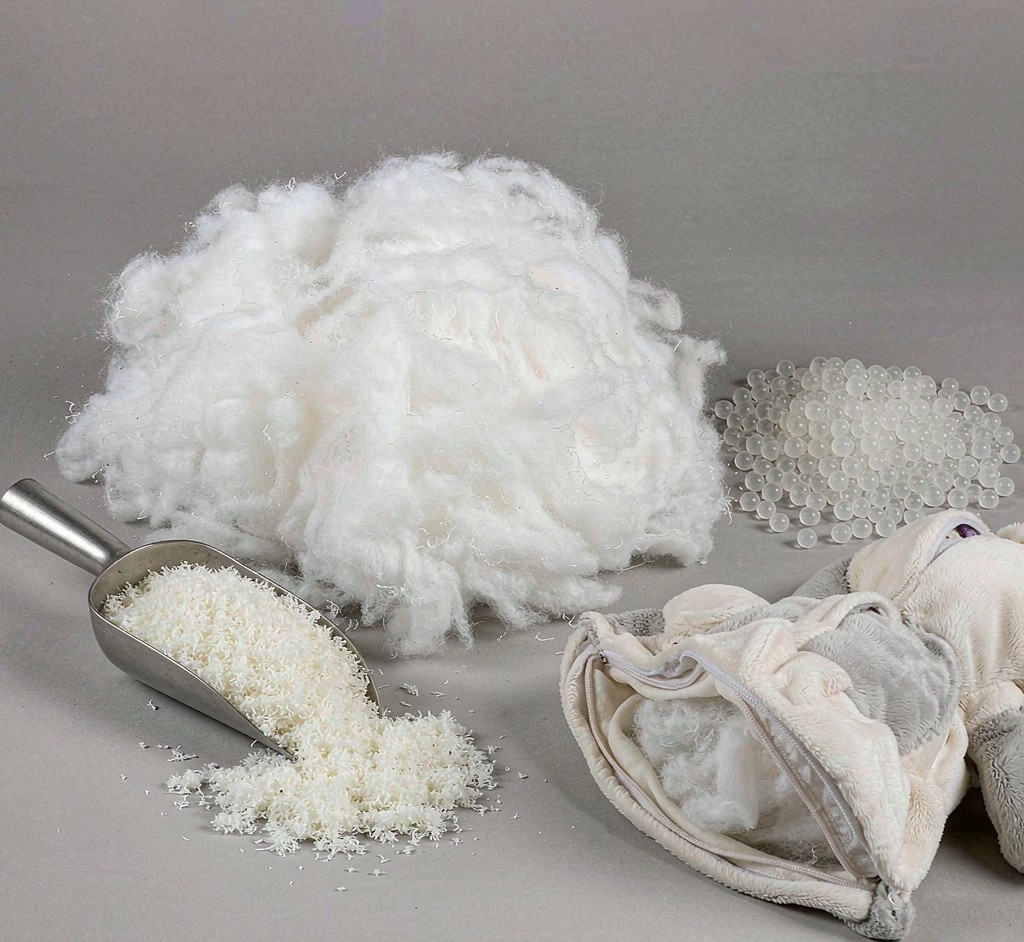
Filling is the invisible half of plush toy materials, and it decides long-term performance. The industry standard is polypropylene (PP) cotton, a synthetic polyester staple fiber that is hypoallergenic, washable, and shape-retaining. The key differentiator is fiber thickness, measured in denier (D):
- 7D PP cotton is a finer, softer fiber that creates a smooth, cloud-like, premium feel. It costs more and is preferred for high-end plush.
- 15D PP cotton is coarser and more resilient, giving a firmer, bouncier fill. It is budget-friendly and the standard for general-purpose toys and larger pieces that need structure.
Beyond PP cotton, plush toy stuffing options include polyester fiberfill for springy shape retention, foam beads and plastic pellets for a weighted “beanie” feel in limbs and bases, and recycled polyester fiber for eco-conscious lines. A 30 cm bear may take 80–100 grams of filling; larger toys need layered or structured core filling so they do not collapse.
| Filling | Softness | Key strength | Watch out for |
|---|---|---|---|
| 7D PP cotton | Very soft | Cloud-like premium feel | Higher cost |
| 15D PP cotton | Soft | Firm, resilient, cost-effective | Less luxurious |
| Foam beads / pellets | Firm | Adds weight, helps toys sit upright | Weighted-feel only where intended |
| Recycled polyester | Soft | Sustainability story | Slightly firmer rebound |
Minky, Velboa, and Premium Fabrics for High-End Lines
If your product is a baby toy, a collectible, or a premium line, minky plush fabric is a frequent first choice. Minky is recognizable by its fine, dotted texture and exceptional softness, which adds a sensory dimension that parents notice immediately. It is also a common choice for OEKO-TEX-certified programs because quality mills can source certified minky with consistent dye lots.
Among plush toy materials, velboa is the professional’s fabric for mass production: its short pile resists pilling, provides consistent color, and keeps embroidery crisp. A licensed character printed or embroidered on velboa stays sharp, while the same design on a long-pile fabric can look muddy. If budget is the driver and the design is simple, standard plush or fleece delivers an honest, cost-effective result.
Accessories and Trims: Small Parts, Big Risk
Eyes, noses, threads, and labels are the highest-risk components in safety testing, which is why they belong in any audit of plush toy materials. For plush toy materials planning, treat accessories as materials too:
- Baby plush defaults to embroidered eyes and stitched details — zero pull risk.
- General plush may use plastic safety eyes, which must pass pull-force testing.
- Threads should be high-tensile polyester for seam strength.
- Labels should be soft woven or printed, skin-safe and compliant.
A design that looks simple in 2D may require complex internal structuring to stand correctly in 3D. Flag small parts early; embroidered details are safer and often cheaper than sourcing compliant plastic components.
Hypoallergenic and Eco Material Choices
For many markets, peluches hipoalergénicos are a selling point rather than an option. PP cotton and high-quality synthetic fabrics are naturally hypoallergenic and easy to clean, which is why they dominate children’s plush. Buyers targeting babies, schools, or health-sensitive consumers should confirm the material set is certified and document it.
Eco programs increasingly specify recycled polyester (rPET) fabric and fill, or certified organic cotton. These carry their own parameters: rPET delivers a feel comparable to virgin polyester while supporting a sustainability story, and organic cotton suits premium natural lines. Specify the certification (GRS, OEKO-TEX, GOTS) in the brief so the factory sources against a standard rather than a claim.
How Materials Affect Cost, Testing, and Reorders
Choosing plush toy materials affects far more than the unit price. It drives cutting loss, sewing speed, defect rate, testing cost, and return rate. A cheaper fabric that increases scrap by ten percent is not cheaper in real terms. Plush toy materials also drive reorder consistency: fabric GSM variation, different stuffing batches, changed dye lots, and new accessory suppliers are the classic reasons a second order “does not feel the same.” Professional factories rely on controlled material libraries rather than open-market sourcing so reorders stay consistent.
Safety testing is another line item shaped by materials. Fabrics and fillings must meet limits on lead, phthalates, and flammability, and certified inputs — OEKO-TEX for textiles, EN71-3 for heavy metals — make the finished-product test far less risky. Choosing compliant plush toy materials up front is cheaper than re-testing after a failure.
Cost Drivers and How to Optimize Without Sacrificing Quality
Plush toy materials are the most significant cost driver in a plush program, followed by complexity and order quantity. To control cost without cheapening the toy:
- Simplify the design. Fewer pattern pieces and fewer embroidery details cut labor directly.
- Match filling to size. Soft low-density fill for toys under 30 cm, balanced density at 30–60 cm, layered structure at 60–100 cm, and core-plus-surface filling above 100 cm.
- Use 15D PP cotton for structural toys and reserve 7D for where the premium feel sells.
- Increase order volume. Bulk purchasing lowers per-unit material cost and setup.
The goal is not the cheapest possible toy; it is the right plush toy materials for the design, the market, and the budget — decided together, documented in writing, and locked in a controlled library.
Why a Direct Factory Partner Helps
Material selection is a collaborative process, and a direct factory partner gives you the fastest feedback loop because the people who sew the toy are the people advising on fabric. StuffPlush is a custom plush manufacturer with 15+ years of OEM and ODM experience, running in-house cutting, embroidery, sewing, stuffing, and assembly for global brands including Disney, Target, McDonalds, and Primark. We build every order with non-toxic, hypoallergenic plush toy materials to ASTM, CPSIA, EN71, and CE standards, and we maintain controlled material libraries so your reorders match your golden sample. See the range across our almohadas de felpa, llaveros de peluchey peluches para vacaciones collections.
Preguntas frecuentes
What materials are plush toys made of? Plush toys are made from an outer fabric, an inner filling, and accessories. Common fabrics are polyester plush, velboa, minky, fleece, faux fur, and cotton blends. The standard filling is polypropylene (PP) cotton, with polyester fiberfill, foam beads, and recycled fibers as alternatives. Accessories include embroidered or safety eyes, threads, and labels.
What is the softest fabric for stuffed animals? Minky and crystal velboa are generally considered the softest plush fabrics. Minky has a fine dotted texture and a silky feel that is popular for baby toys and premium lines, while crystal velboa offers an ultra-soft short pile with a smooth finish. Both are softer than standard plush or fleece but cost more.
What is PP cotton filling? PP cotton is polypropylene staple fiber used as the standard filling for plush toys. It is hypoallergenic, washable, and shape-retaining. It is graded by fiber thickness in denier: 7D PP cotton is finer and softer for a premium feel, while 15D PP cotton is coarser and more resilient for firmer, budget-friendly filling.
What type of stuffing is best for plush toys? PP cotton is the best all-round stuffing for most plush toys because it balances softness, resilience, and cost. Choose 7D PP cotton for a cloud-like premium feel, 15D for firmer structural toys, and foam beads or pellets when you want a weighted “beanie” effect in limbs or bases. Recycled polyester fiber suits eco programs.
Are plush toy materials safe and hypoallergenic? High-quality synthetic plush materials such as PP cotton and certified polyester are naturally hypoallergenic and safe when sourced from compliant mills. Confirm materials are certified to standards such as OEKO-TEX, EN71-3, or ASTM F963, and use embroidered features instead of small plastic parts for baby plush.
How do I choose fabric and filling for a custom plush order? Start with the design’s needs: sharp details favor short-pile velboa, maximum softness favors minky, and structural toys need resilient 15D filling or layered cores. Match filling density to toy size, confirm certified and dye-stable materials, and document every choice in writing so sampling and reorders stay consistent.
Conclusión
Choosing plush toy materials is where a good plush program is won or lost. Pair the right fabric with the right filling, specify measurable parameters, treat accessories as materials, and lock compliant inputs in a controlled library so every order and reorder matches. The brands that succeed treat material selection as a design decision made with the factory — not an afterthought discovered at sampling. Review our animales de peluche y mochilas de felpa collections, explore peluches para vacaciones y talking plush toys for material programs in practice, and reach out through About StuffPlush when your brief is ready for a materials-first quote.