 Spanish
  English
  German
  French
  Russian
  Korean
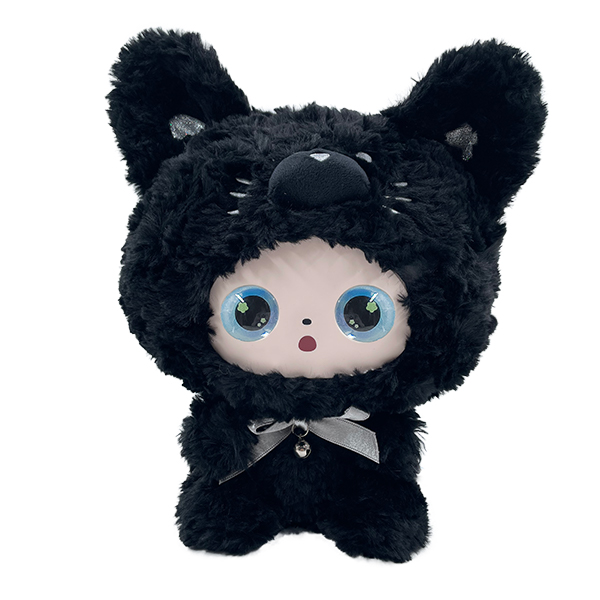
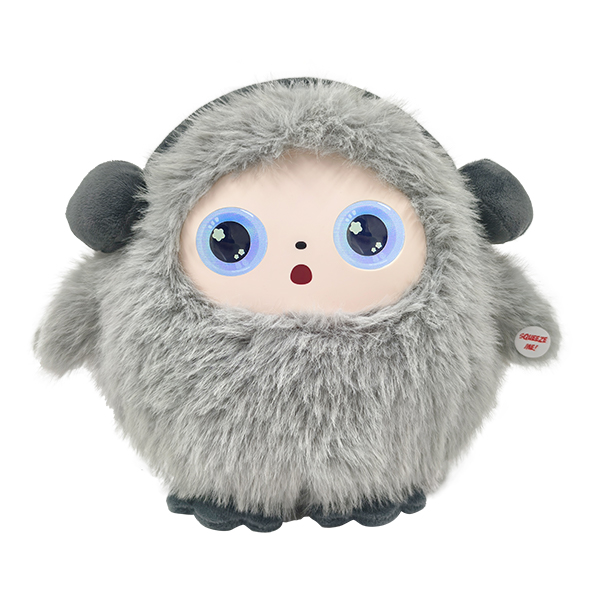
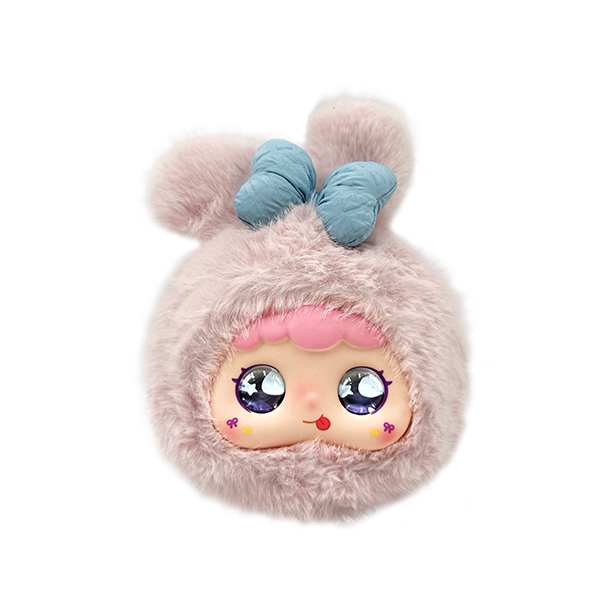
The Canton Fair generates more plush toy supplier conversations in five days than most buyers manage in a year. It also generates more false confidence than any other sourcing channel. Industry estimates suggest that more than 60% of deals initiated at the Fair fail before production — not because buyers negotiate poorly, but because a polished booth is a marketing exercise, not a verification. The exhibitor who charmed you in Guangzhou may be a genuine factory, a trading company wearing a factory’s clothes, or an agent renting a booth. Until you validate the factory audit reports and walk the production line, you do not know which.
En StuffPlush, we exhibit at every phase of the Fair (find us in the toys halls) and we also inherit, every season, the cleanup work from buyers whose Fair deals collapsed. This guide is the follow-up protocol we wish every buyer ran: a systematic, document-driven process for converting Fair contacts into verified plush toy manufacturing partners — before any deposit leaves your account.
Why the Booth Is Not the Factory
Understanding what a Fair booth can and cannot prove is the foundation of post-show due diligence:
| The Booth Proves | The Booth Does NOT Prove |
|---|---|
| The company can afford a booth | The company owns a factory |
| Samples of reasonable quality exist | Bulk production will match the samples |
| Staff can answer commercial questions | Staff work at the factory (often hired for the week) |
| Certificates exist on display | Certificates are valid, current, and belong to this entity |
| The salesperson is friendly | The factory has capacity for your order in your season |
Three specific failure patterns account for most post-Fair disasters:
- The rented booth: agents and small traders rent space in factory-heavy halls and present themselves as manufacturers. Once the order is confirmed, production is subcontracted to the lowest-bidding workshop — quality control disappears, and nobody at the booth you visited has any involvement in your goods.
- The showroom factory: a real but small workshop with a beautiful showroom and a production floor that cannot handle your volume. Your order gets split across multiple subcontractors, producing the classic “first carton perfect, later cartons garbage” experience.
- The certificate borrower: valid-looking ISO/BSCI/ICTI certificates displayed at the booth that belong to a different legal entity — a parent company, a sister factory, or simply a neighboring supplier. When your compliance audit checks the certificate holder’s name against the invoice issuer, the mismatch voids everything.
The 7-Day Post-Fair Verification Sprint
Run this sequence in the week after the Fair closes, while memory is fresh and suppliers are still responsive:
Day 1–2: Document Collection
Send every shortlisted supplier a single email requesting:
- Business license— full scan, not a screenshot of a screen
- Import/export registration (customs code or record of foreign trade operator)
- Factory audit reports: BSCI/Sedex SMETA (social compliance), ISO 9001 (quality system), ICTI Ethical Toy Program (toy-specific) — check the certificate holder’s registered name matches the business license exactly
- Product test reports: ASTM F963 (US) and EN 71 (EU) for plush, from CPSC-accepted / ISO 17025 accredited labs, dated within 12 months
- Factory address and video tour availability
Response speed and completeness are themselves diagnostic data. A real factory assembles this package in 1–2 days because the documents exist in a drawer; a pretender takes a week because documents must be borrowed, edited, or excused.
Day 3: Corporate Registry Check
Verify every document against Chinese corporate databases (Qichacha/Tianyancha for self-service, or a verification service for depth):
| Check | What It Reveals | Red Flag |
|---|---|---|
| Registered capital & paid-in amount | Claimed vs. real scale | 500-worker factory with ¥100K paid-in capital |
| Business scope | Licensed activities | “Trading” scope from a self-declared factory |
| Registration date | Maturity vs. booth claims | “20 years of experience” on a 2-year-old entity |
| Litigation & enforcement records | Payment disputes, quality lawsuits, blacklisting | Multiple 2025–2026 contract dispute judgments |
| Shareholder structure | Related entities, shell games | Same owner as three “competing” booths you visited |
| Export record | Actual shipment history | No customs records despite “12 years exporting to the US” |
Day 4–5: The Factory Audit — In Person or Via Third Party
This is the step that cannot be skipped, delegated to the supplier, or replaced by a Zoom call alone. Your options in descending order of reliability:
- Personal visit — if you are already in China or the order exceeds $50K, stay two extra days. Factory visits in Guangdong (most plush production is in Yangzhou, Qingdao, Shenzhen/Dongguan corridors) cost a day each.
- Third-party audit — SGS, QIMA, V-Trust, and similar firms run 1-day audits for $300–500, delivering photo-documented reports within 3–5 working days. This is the right choice for orders of $10–50K or when travel is impractical.
- Structured live video audit — a fallback, never a substitute. If you must rely on video, use our production-line checklist below and insist on continuous, uncut footage of each zone — not a curated montage.
The Production Line Checklist: What to Verify on the Floor
Whether in person or via audit report, evaluate the factory against this sequence — it mirrors how plush production actually flows, so gaps in the middle reveal subcontracting:
| Zone | What Should Exist | Warning Signs |
|---|---|---|
| Fabric warehouse | Rolls of plush fabric with lot tags; your target materials in stock | Empty racks; fabric “ordered after deposit” |
| Cutting area | Automated or manual cutting tables, pattern templates on-site | No cutting capability = cutting is subcontracted = quality variance |
| Sewing floor | Rows of industrial machines with workers actively sewing plush; in-process plush in baskets | Machines idle; sewn goods for brands you don’t recognize stacked chaotically |
| Bordado | In-house multi-head embroidery machines (or explicit “partner 10 min away” honesty) | Claims of in-house embroidery with zero machines |
| Stuffing & shaping | Stuffing machines with fiber weight calibration; shaping stations | Hand-stuffing only for bulk orders = inconsistent fill weights |
| Metal detection | Working needle detector with calibration records (critical for plush QC) | No detector or no daily calibration log — a hard disqualifier for children’s products |
| QC station | Dedicated inspection tables, lighting, defect-tagged samples | “QC” as an afterthought at the packing table |
| Packing & warehouse | Carton storage, finished-goods inventory with production date labels | No finished goods = factory is currently between “booth season” and nothing |
The needle detector deserves its own emphasis. Broken needles inside stuffed toys are the plush industry’s most notorious hazard, and a functioning, calibrated needle detection system is non-negotiable for any serious proveedor de peluches. Ask to see it run on a live sample. A factory that cannot demonstrate needle detection within 60 seconds of being asked does not have one in daily use.
Day 6: The Sample That Matches the Booth
Never rely on the Fair sample itself — booth samples are hand-finished showcase units. Request a fresh production-grade sample of your intended design, made on the normal line with normal materials. Then verify:
- Fabric weight and hand-feel vs. the booth sample (substitution here is the #1 post-Fair bait-and-switch)
- Stitch density: 8–12 stitches per inch on seams; overlock integrity at stress points
- Stuffing firmness and weight consistency
- Embroidery cleanliness (no puckering, correct thread colors)
- Labels, hangtags, and any required compliance markings
Expect 7–12 days for a custom-design production sample. A factory that promises 3 days is sending you a hand-made showcase unit again — the exact artifact you were trying to escape.
Day 7: Payment Terms as the Final Filter
Verification ends at the payment structure. Standard, protective terms for a first order:
- 30% deposit / 70% after pre-shipment inspection (T/T) — the industry norm
- Never 100% upfront, regardless of relationship warmth; a real factory never needs it
- Bank account beneficiary must exactly match the business license name — third-party accounts void every verification you just completed
- For larger programs, consider a small trial order (500–1,000 units) as a live audit before committing the full program
Reading a Factory Audit Report Like an Auditor
If you commission a third-party audit (or a supplier shares an old one), do not just check the score. Read these sections with suspicion:
- Scope and legal entity: the audited entity name must match your business license copy, and the address must match the factory address given. “Same group, different entity” is the most common audit loophole.
- Capacity utilization: a factory running at 40% capacity in your production month is a delay risk (or a facade); one running at 110% is an outsourcing risk. The report’s production data tells you which.
- Worker interviews: credible audits include off-line worker interviews. High turnover or significant use of temporary labor before your peak season = quality drift risk.
- Non-conformities and their age: compare the finding list year-over-year. A factory with the same fire-safety or wage-record findings for three consecutive audits has a management problem, not a paperwork problem.
- Who paid for the audit: a report commissioned by the factory itself is a marketing asset; one commissioned by a recognizable brand client, with that brand’s name on the scope, carries real weight.
Special Case: You Already Signed Something at the Fair
Many buyers leave the Fair having signed an “intent sheet” or even placed a deposit. If that was you:
- Intent sheets and Memorandums of Understanding signed at booths are generally non-binding price/quantity discussions. They buy you time to verify, not obligations to proceed — but check for any deposit clause.
- If a deposit was paid to an unverified supplier, do not panic-cancel based on suspicion alone. Run the verification sprint first; if documents fail to materialize or the registry check shows red flags, request a refund in writing immediately and escalate through the Fair’s exhibitor complaint channel (the Fair takes booth misuse seriously and can pressure refund compliance).
- Going forward, adopt a personal rule: business cards and admiration at the booth; money only after the checklist.
How StuffPlush Handles Fair Follow-Up
We sit on both sides of this dynamic — we meet hundreds of buyers at the Fair every year, and we know exactly why they should distrust what happens at a booth. So we built our post-Fair process to make verification frictionless:
- Pre-assembled verification pack: every buyer who leaves our booth receives a QR code linking to our business license, audit certificates (BSCI/Sedex), current ASTM F963 and EN 71 test reports, and a factory video walkthrough — before you even ask.
- Open-door factory policy: we schedule buyer visits within a week of the Fair, on the production floor, not the showroom. If your timeline prevents travel, we arrange a live, unscripted video audit on your schedule with any zones you want to see.
- Golden sample discipline: our production samples match booth samples because both come from the same line, governed by the same quality control system we run year-round — including daily-calibrated needle detection on every shipment.
- Standard protective terms: 30/70 T/T, pre-shipment inspection rights, and account-name matching are our default structure, not concessions you must negotiate.
Whether your next custom plush program starts from our booth or someone else’s, run the full verification protocol. Good factories — including, frankly, our competitors’ best ones — will pass it easily and will respect you for running it. The ones who bristle at the checklist were the reason the checklist exists.
Preguntas frecuentes
The supplier showed me audit certificates at their booth. Isn’t that enough?
No. Booth-displayed certificates are unverifiable on the spot: they may be expired, belong to a different legal entity, or be digitally altered. Verify three things post-Fair: (1) the certificate holder name matches the business license entity exactly, (2) the certificate is within its validity period, (3) the audit scope covers the actual factory address and the product category (a garment-factory BSCI does not automatically cover plush manufacturing). Legitimate factories can produce all three confirmations within 48 hours.
How much does a third-party factory audit cost, and is it worth it for a small order?
One-day supplier audits from major firms (SGS, QIMA, V-Trust, TUV) typically run $300–500 including the report. For orders under $10K, a full audit may exceed your risk tolerance threshold — in that case, combine the corporate registry check ($30–80) with a structured live video audit you conduct yourself. For any order above $10–15K, or any first order from a new supplier, the audit is cheap insurance: one avoided quality disaster pays for a decade of audits.
The factory is 2,000 km from the Fair. How do I verify without traveling?
Three workable layers, in combination: (1) corporate registry verification of the legal entity, (2) a third-party on-site audit with a photo-documented report ($300–500, 3–5 days), and (3) a live video audit where YOU direct the camera (“show me the needle detector running, then walk me to the cutting table without cuts”). Remote verification is genuinely workable for most orders — what is not workable is skipping verification entirely because travel is inconvenient.
What are the top red flags that should make me walk away immediately?
Five hard disqualifiers, regardless of price appeal: refusal or endless deferral of a factory visit; bank account name that differs from the business license name; no needle detection capability for children’s plush; certificates that cannot be verified within 48 hours; and insistence on 100% prepayment. Each of these, on its own, ends the conversation — suppliers who fail them are not having a bad week, they are telling you what the next six months will feel like.
How long should the whole verification process take?
A well-run post-Fair verification takes 7–14 días from first email to verified supplier: 1–2 days for document collection, 1 day for registry checks, 3–5 days for the audit (or same-day if you visit in person), 7–12 days for the production sample — overlapping where possible. Buyers sometimes fear this delays their program; in reality it prevents the far longer delay of a failed bulk order, and it slots cleanly into a normal production calendar if you start it the week the Fair ends. Our sampling and production guide shows how verification time fits into season-critical timelines.
Conclusion: The Fair Finds Suppliers; Verification Keeps Them
The Canton Fair is still the single most efficient place to discover new fabricantes de peluches — nowhere else can you touch two hundred factories’ work in three days. But discovery and verification are different disciplines, and the buyers who thrive treat the Fair as the start of diligence, not the end of it. Collect documents in the first two days, verify the corporate entity, audit the production floor, demand a production-grade sample, and let the payment structure be your final filter.
En StuffPlush, we welcome that scrutiny because we live under it year-round — our quality control, certification, and open-factory practices are built for buyers who verify. If you met us at the 140th Canton Fair (Phase 2, Booth 19.2 G25-28) or you’re planning your holiday plush sourcing now, Contacto and we’ll send the full verification pack the same day — audit reports, test certificates, and a standing invitation to walk our production line, physically or on video, whenever you’re ready.