 German
  English
  French
  Russian
  Korean
  Spanish
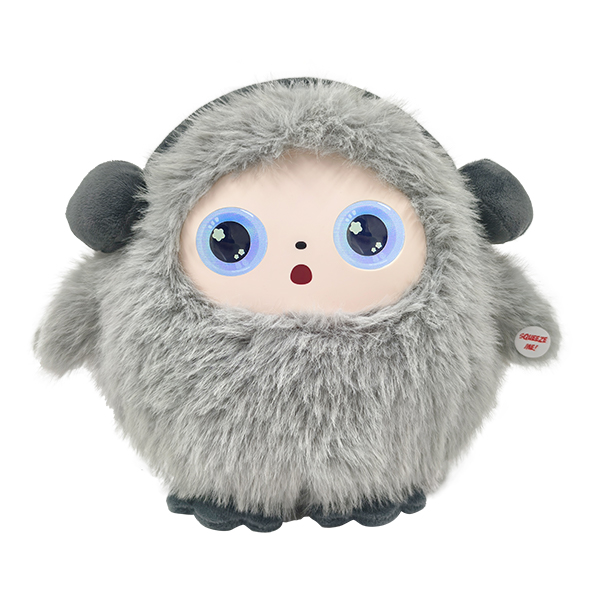
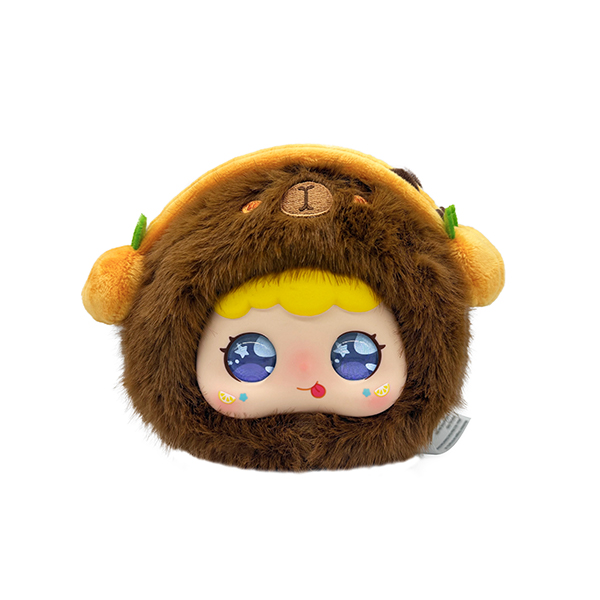
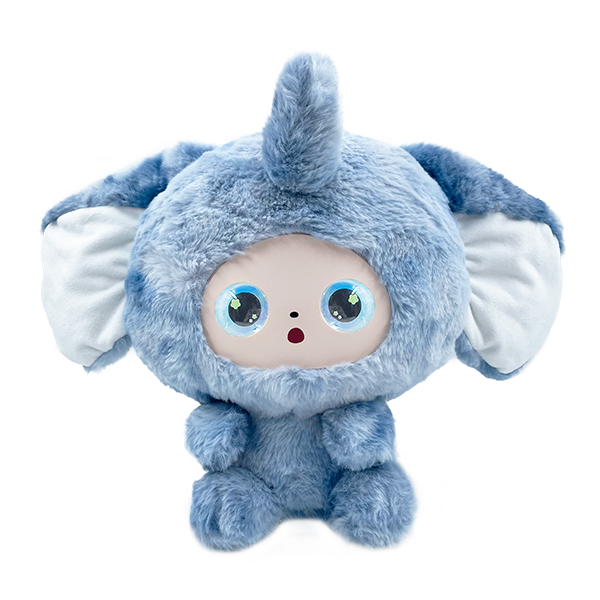
Sourcing individuelle Plüschtiere for your brand, retail line, or promotional campaign starts with one decision: choosing the right manufacturing partner. A reliable custom plush toy manufacturer does far more than stitch fabric — it protects your margins, your launch dates, and your brand reputation. With hundreds of factories competing for OEM and ODM orders, the gap between a smooth production run and a costly recall usually comes down to the questions you ask before signing. This guide walks procurement managers, importers, and brand owners through the exact criteria to verify — from certifications and MOQ to sampling and logistics — so your next order of custom plush toys arrives safe, on time, and on spec. For background on a manufacturer that meets these criteria, see About StuffPlush.
Why Custom Plush Toys Are a Smart B2B Investment in 2026
The global plush toy market keeps climbing, and the fastest-growing slice is no longer children alone. Adult collectors, wellness brands, and promotional agencies now drive a meaningful share of demand, which is exactly why individuelle Plüschtiere have become a strategic category for private labels and retailers. A branded plush mascot turns a marketing budget into a shelf-ready product; a custom character drives repeat purchases that generic imports cannot.
For B2B buyers, the appeal is operational as much as commercial. Custom plush toys let you control material quality, safety compliance, and unit economics in a way off-the-shelf products never allow. When you partner with an experienced custom plush toy manufacturer, you are not buying inventory — you are building a differentiated SKU with defensible margins. The trade-off is due diligence: the same flexibility that makes custom plush toys valuable also makes supplier selection the single most important step in the project.
1. Verify Manufacturer Experience With Custom Plush Toys
Not every plush factory specializes in individuelle Plüschtiere. Many are built for catalog reorders, not for developing a unique design from a sketch or a tech pack. When you evaluate a candidate, ask how many years they have spent on OEM and ODM plush work, and whether they regularly serve the US and EU markets you sell into.
Experienced teams understand pattern making, material behavior, and structural reinforcement — the details that separate a toy that survives shipping from one that arrives misshapen. A manufacturer with a track record of custom plush toys for overseas brands will also speak your language on compliance and revision cycles. Request a portfolio of past projects and, where possible, client references. If a factory can only show generic catalog items, treat that as a signal they may struggle with the development support your custom plush toys actually require.
2. Certification Checklist: What Every Custom Plush Toy Order Needs
Safety compliance is non-negotiable for children’s products, and it is the first thing a retailer or customs officer will check. A credible custom plush toy manufacturer should be able to document conformance to the standards that apply to your destination market.
| Market | Standard | What it covers |
|---|---|---|
| Vereinigte Staaten | ASTM F963 | Mechanical, physical, and flammability safety for toys |
| Vereinigte Staaten | CPSIA | Limits on lead and phthalates; tracking-label rules |
| Europäische Union | EN71-1/2/3 | Mechanical, flammability, and chemical safety |
| Europäische Union | CE | Declaration of conformance for the EU market |
If you sell to both regions, your custom plush toys must clear both stacks of rules. Ask for third-party test reports rather than self-declared compliance, and confirm the factory uses non-toxic, hypoallergenic materials with securely attached eyes and noses to prevent choking hazards. StuffPlush, for example, builds every order to ASTM, CPSIA, EN71, and CE requirements and uses non-toxic fabrics suited to all age groups — a baseline any serious custom plush toy manufacturer should match.
3. OEM vs ODM Custom Plush Toys: Which Model Fits Your Project
Understanding the two production models prevents mismatch between your brief and the factory’s strengths. The right choice shapes cost, lead time, and how original your product really is.
| Model | Who designs | Best for | Trade-off |
|---|---|---|---|
| OEM | You provide the tech pack | Brands with finished artwork | Full control, slower start |
| ODM | Factory provides base design | Faster time-to-market | Less originality |
| OEM + ODM | Shared development | Flexible innovation | Requires a capable partner |
With OEM plush toys, you hand over production-ready artwork and the factory replicates it precisely — ideal when brand identity is locked. With ODM, you select from the factory’s existing concepts and apply your logo or colorway, which shortens development but limits uniqueness. Many buyers now blend both: use ODM speed for a seasonal drop, then invest in OEM custom plush toys for a hero SKU. Either way, confirm your custom plush toy manufacturer can support the model your roadmap needs before you request a quote.
4. Understand MOQ and Lead Time for Custom Plush Toys
Minimum order quantity and lead time determine whether a project is even feasible for your cash flow and calendar. Your plush toy MOQ should reflect both your working capital and the factory’s production efficiency, not just the lowest headline number a sales rep quotes. Industry norms for custom plush toys typically land between 500 and 1,000 units, with bulk production running 25–45 days after sample approval.
| Factor | Typical range | StuffPlush standard |
|---|---|---|
| MOQ | 500–1,000 pcs | 1,000 pcs (flexible by size/design) |
| Sample lead time | 7–14 Tage | 7–14 Tage |
| Bulk lead time | 25–45 days | 40–45 Tage |
| Payment terms | 30% deposit common | 30% T/T, 70% before shipment |
For custom plush toys, a lower MOQ is not automatically better — it can signal limited capacity or higher per-unit cost. What matters is transparency: a manufacturer should state its MOQ up front and explain how size, fabric, and complexity affect it. Build your timeline backward from the retail or event date, then add buffer for revisions. A custom plush toy manufacturer that quotes realistic lead times — and protects them — is worth more than one promising an impossibly fast turnaround.
5. Evaluate Production Capacity and Quality Control
Capacity questions separate factories that can scale from those that overpromise. For custom plush toys, ask about factory size, number of production lines, and in-house functions such as sewing, embroidery, stuffing, and packaging. Vertical integration reduces hand-offs and keeps quality consistent.
Quality control is where brands are made or broken. A professional custom plush toy manufacturer runs QC across the whole process: raw-material inspection, in-line checks during sewing, and a final audit before shipment. Look for a dedicated QC team and a documented inspection protocol. For high-stakes orders, request a third-party inspection or a factory video tour. Peaks such as the pre-Christmas rush and the Lunar New Year shutdown compress capacity across the industry, so early order confirmation is the simplest way to defend your slot for custom plush toys.
6. Materials and Customization Options for Custom Plush Toys
Material choice drives how a toy feels, how safely it passes testing, and how long it lasts. The best custom plush toy manufacturer will guide you through options rather than defaulting to the cheapest fabric.
| Element | Option | Why it matters |
|---|---|---|
| Outer fabric | Polyester plush, minky, faux fur | Softness, durability, look |
| Filling | PP cotton, recycled fiber | Safety, shape retention |
| Einzelheiten | Embroidery vs printed | Embroidery avoids choking risk |
| Add-ons | Sound boxes, magnets, backpack straps | Function, compliance review |
For custom plush toys aimed at young children, embroidery is safer than glued plastic parts, and non-toxic fillings are mandatory. Beyond materials, confirm the factory supports the customization your brand needs: size ranges, color matching, embroidered names, and branded packaging. If your line includes sound features or wearable formats, verify the manufacturer has shipped those safely before. The right partner turns material and customization decisions into a competitive advantage for your custom plush toys.
7. Communication, Payment Terms, and Logistics
Smooth communication is the quiet differentiator in overseas sourcing. A responsive custom plush toy manufacturer assigns a dedicated account manager, answers technical questions clearly, and flags risks early instead of after they become delays. Slow or vague replies during quoting are the most reliable red flag for how bulk production will go.
On commercials, understand exactly what the quote includes: sample fees, unit price by volume tier, packaging, testing, and freight. Common terms for custom plush toys are a 30% deposit with 70% due before shipment, though flexible suppliers will discuss alternatives. On logistics, confirm which Incoterms the factory supports — FOB, CIF, and EXW are the usual options — and choose the one that fits your freight forwarder and risk appetite. A custom plush toy manufacturer comfortable with multiple shipping arrangements makes international trade noticeably less painful.
8. Request Samples Before Bulk Custom Plush Toys Production
Never skip the sample stage. A physical prototype of your custom plush toys is the only way to confirm the factory interpreted your artwork correctly — proportions, fur hand-feel, stitch quality, and color accuracy all reveal themselves in the hand that a render never shows.
Sample development typically takes 7–14 days. Use it to request revisions and to lock the approved sample as the golden reference for bulk production. Be wary of a factory that resists sampling fees or rushes this step; a refundable sample charge is normal and signals serious intent. Once the sample is approved, hold the manufacturer to it: the bulk run of custom plush toys should match the prototype on every measurable dimension, from seam tolerance to filling weight.
Red Flags: How to Avoid Low-Quality Custom Plush Toy Factories
A few patterns reliably predict trouble. The “bait and switch” — an excellent prototype followed by cheaper materials in bulk — is the most common. Others include crooked seams, mismatched dye lots, missed deadlines that blow your launch, hidden fees for packaging or failed inspections, and non-compliant materials that fail ASTM or EN71 and render a shipment unsellable.
Protect yourself by verifying certifications with real test reports, requesting references from brands in your market, and starting with a modest first order to prove the relationship. A trustworthy custom plush toy manufacturer behaves like an extension of your team: it suggests better materials, warns about risky designs, and documents every step. If a supplier’s only pitch is the lowest price, that price usually hides a cost you do not want to pay.
Why Choose StuffPlush for Your Custom Plush Toys
StuffPlush is a custom plush toy manufacturer and full-range stuffed animal manufacturer with 15+ years of OEM/ODM experience, serving global brands including Disney, Target, McDonalds, and Primark. The factory builds to ASTM, CPSIA, EN71, and CE standards using non-toxic, hypoallergenic materials, with a standard MOQ of 1,000 pieces, 7–14 day sampling, and 40–45 day bulk lead times. Explore our Hersteller von Plüschtieren capabilities, our Hersteller von Plüsch-Kissen line, the Hersteller sprechender Plüschtiere range, or the Hersteller von Plüschspielzeug für den Urlaub collection — and learn more about StuffPlush before requesting a quote.
Häufig gestellte Fragen
What is the typical MOQ for custom plush toys? Most factories set a minimum of 500–1,000 pieces. StuffPlush’s standard MOQ is 1,000 pieces but can be adjusted based on size, fabric, and design complexity — contact the sales team to discuss your specific volume.
How long does it take to produce custom plush toys? Sample development usually runs 7–14 days, and bulk production 40–45 days after sample approval. Total timeline depends on design complexity, order size, and seasonality.
Which certifications should a custom plush toy manufacturer have? For the US market, ASTM F963 and CPSIA; for the EU, EN71-1/2/3 and CE. Ask for third-party test reports, not just self-declared compliance.
What is the difference between OEM and ODM plush toys? OEM means you supply the finished design and the factory produces it; ODM means the factory provides a base design you brand and customize. Many buyers use both across a product roadmap.
Can I request a sample before placing a bulk order? Yes, and you should. A refundable sample fee is standard and lets you verify quality, materials, and accuracy before committing to production.
What payment and shipping terms are common? A 30% deposit with 70% due before shipment is typical, and factories usually support FOB, CIF, or EXW shipping terms depending on your logistics setup.
Schlussfolgerung
Choosing a Hersteller von Plüschtieren is a long-term partnership decision, not a one-time purchase. The buyers who win are the ones who verify experience, demand real certification, understand MOQ and lead time, and protect their brand with samples and clear communication. Custom plush toys reward that discipline with differentiated products and defensible margins. If you are planning a private-label or promotional plush program, start by reviewing our Hersteller von Plüschtieren und Hersteller von Plüsch-Kissen pages, then reach out to StuffPlush for a catalog and a tailored quote — the right partner makes the entire journey from sketch to shelf far smoother.