 German
 English
 French
 Russian
 Korean
 Spanish
Easter 2027 lands on Sunday, March 28 — one of the earliest Easters of the decade, and that single date reshapes the entire commercial calendar for Easter plush programs. A March 28 holiday means consumer purchasing starts in early March, retail resets happen in February, and — critically for importers — production must complete before the Chinese New Year shutdown window we mapped in our CNY 2027 sourcing countdown. Brands that treated Easter as a “spring project” will find the ordering window closed before Valentine’s stock even clears.
The reward for planning early is real: Easter gifting keeps growing as the “mini-Christmas” of the spring calendar — a US market measured in the tens of billions of dollars across candy, decor, and gifts, with plush and non-candy basket gifts among the fastest-growing segments as parents actively seek less-sugar alternatives. This guide forecasts the Easter 2027 plush market: the pastel palette direction, the weighted-base bunny trend, the product formats that convert, and the compressed timeline your program needs to hit. For the gifting-design context behind modern seasonal plush, our Valentine’s 2027 trends analysis and the functional plush category guide are the two companion reads.
Why Easter 2027 Is Structurally Different
Three forces make this cycle unusual:
| Factor | Standard Year | Easter 2027 Reality |
|---|---|---|
| Holiday date | Late March–mid April | March 28 — early |
| Retail reset | Late Feb–early March | Early–mid February |
| Pre-holiday sell window | 5–7 weeks | ~4 weeks (compressed) |
| Production deadline | Comfortably post-CNY | Before mid-January (CNY is Feb 6) |
| Order placement | Nov–Dec | Oct–Nov 2026 — essentially now |
The compressed calendar changes assortment strategy, not just scheduling: with a four-week sell window, depth on fewer SKUs beats breadth on many — a lesson straight out of Q4 rush planning applied to spring.
Trend 1: The Pastel Palette Gets Sophisticated
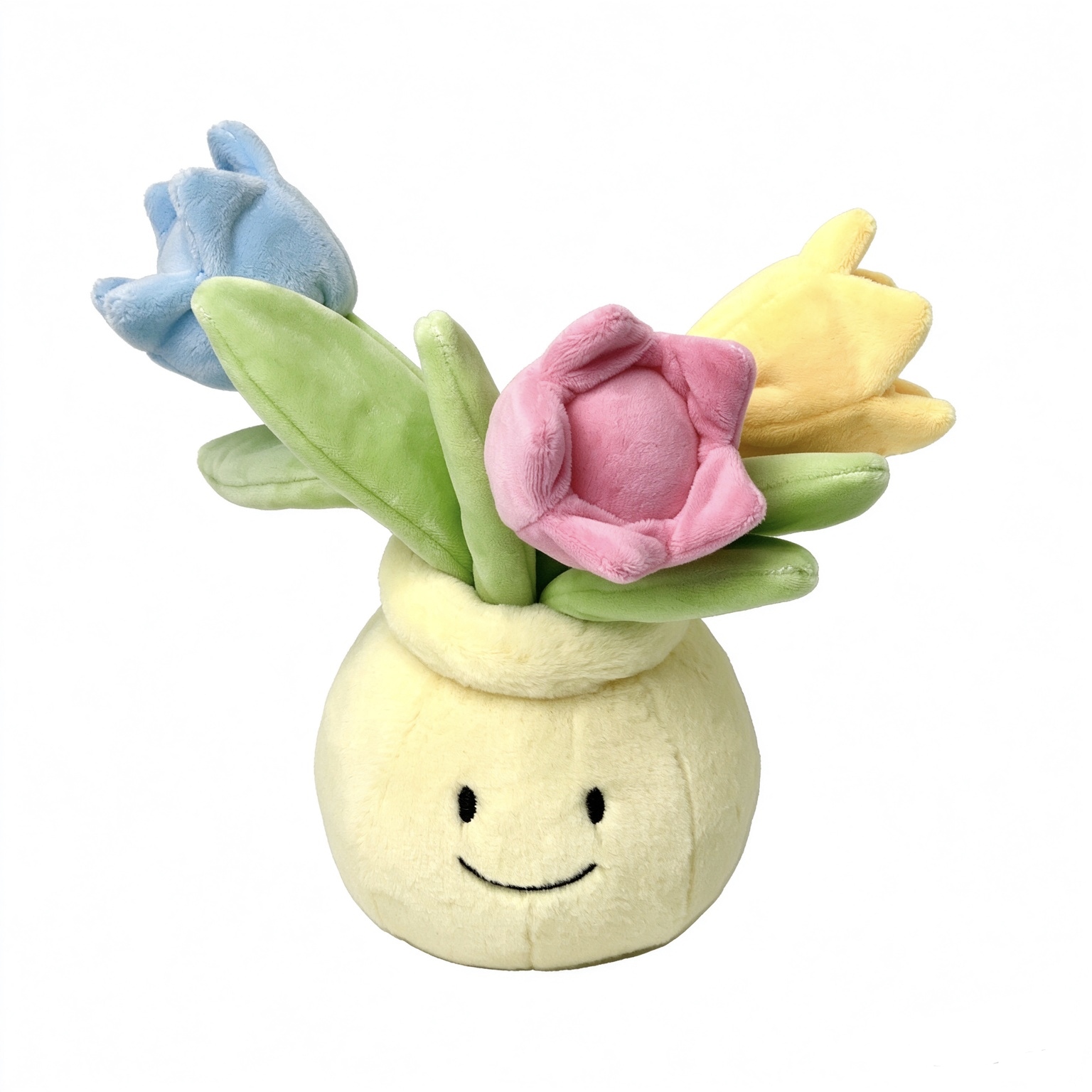
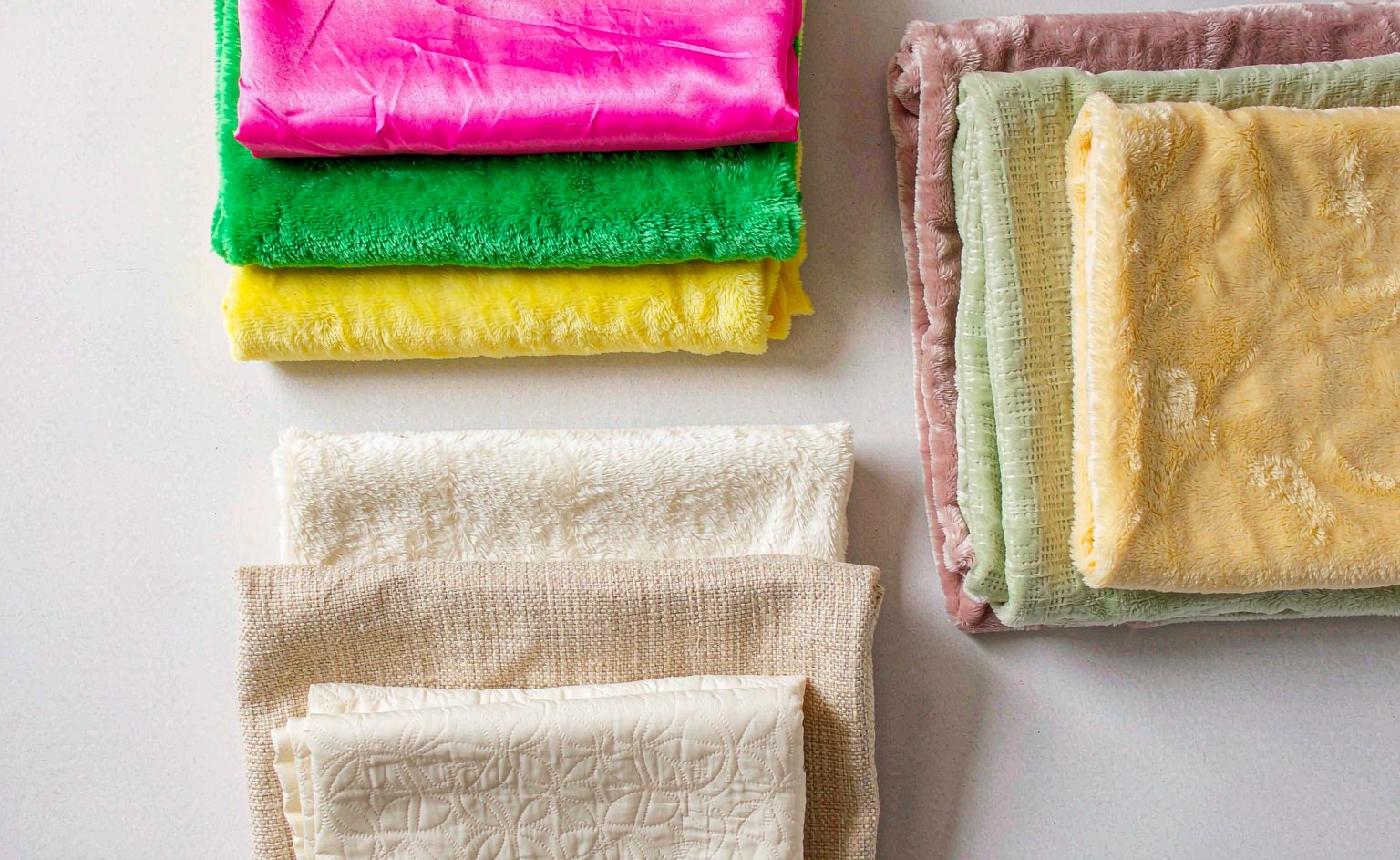
The biggest visual shift for 2027: pastel is growing up. The classic Easter bright-pastel set (bubblegum pink, kelly green, sky blue) still anchors the category, but the growth is in the muted, design-forward palette that took over general plush styling — the same desaturated tones driving the ugly-cute aesthetic into seasonal product:
| Palette Tier | Colors | Retail Positioning | Photography Performance |
|---|---|---|---|
| Classic Easter brights | Hot pink, kelly green, sunny yellow | Mass-market, basket-stuffer tier | High visibility, reads “Easter” instantly |
| Muted pastels (the 2027 growth tier) | Dusty rose, sage, buttercream, powder blue, lavender grey | Premium and design-led retail | Excellent — natural light, social-media friendly |
| Warm neutrals | Cream, oatmeal, tan | Cross-season “evergreen bunny” SKUs | Strong — extends past Easter |
The strategic play is the cross-holiday tier: a bunny in cream or oatmeal with no Easter-specific detailing sells through March und remains a full-price SKU through the year — the single best defense against the seasonal-leftover problem that plagues holiday plush. Our guidance for 2027 assortments: roughly 40% classic Easter brights (basket-stuffer depth), 40% muted pastels (core margin), 20% neutral evergreen designs (leftover insurance).
Trend 2: Weighted-Base Bunnies — The Sitting-Straight SKU
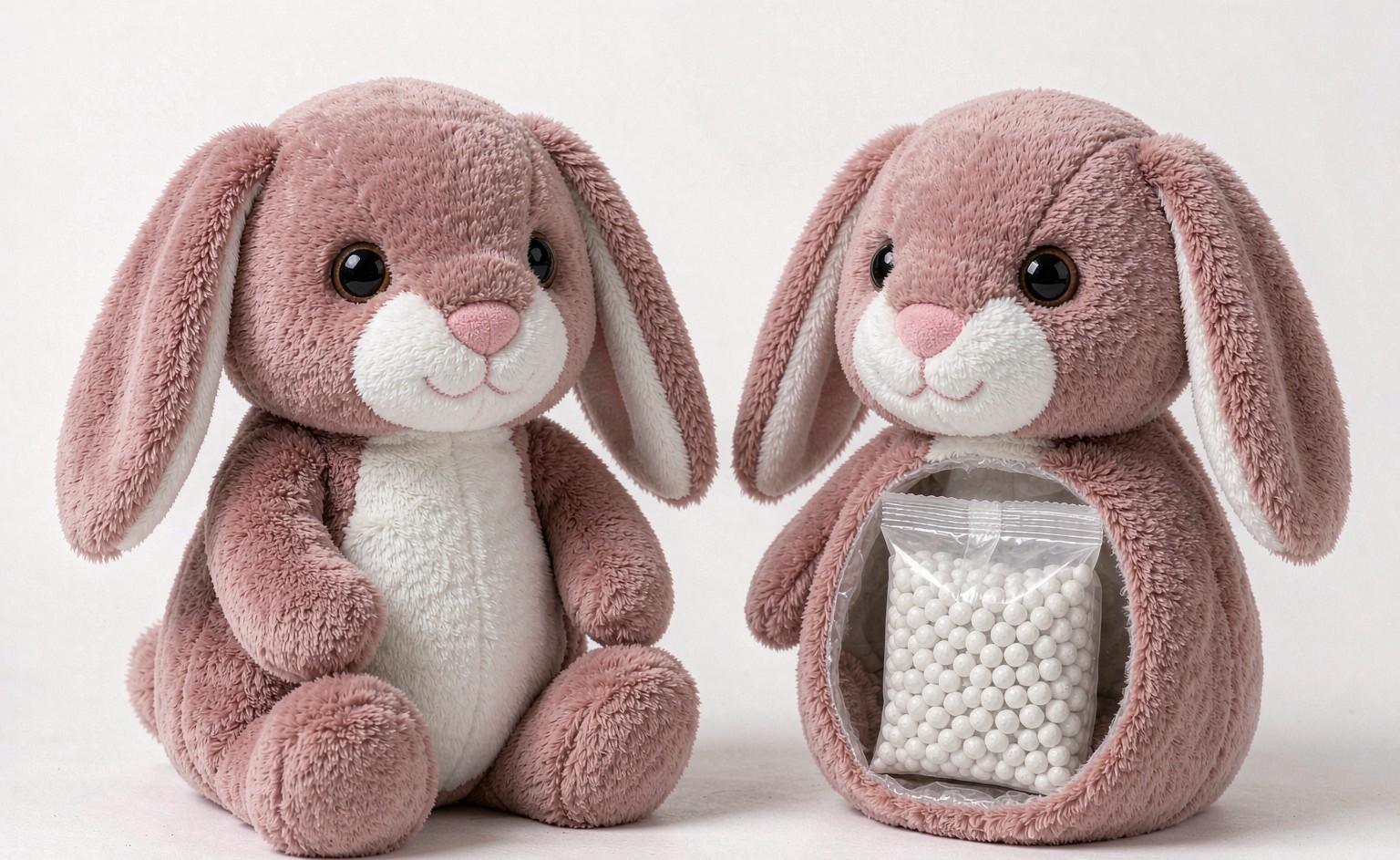
The most interesting product-engineering trend for Easter 2027 is the weighted-base bunny: plush designed with a sealed, weighted pellet base that lets it sit upright unaided — on a shelf, in a basket, on a desk. It sounds minor; commercially it is not.
Why the Weighted Base Converts
- Retail display value: an upright-sitting plush photographs and merchandises dramatically better than a slumping one — no hidden props, no leaning, no “tired bunny” shelf presence.
- Gift-box readiness: weighted bunnies arrive in gift packaging and stay posed — critical for the gift-box tier where the product is seen before it is touched.
- The comfort crossover: weighted products ride the broader comfort-and-calm consumer trend (the same force behind weighted plush engineering in the wellness segment), giving the base weight a story beyond display.
The Engineering and Compliance Reality
A weighted base is a safety-critical feature, not just a design choice: pellet bags must be sealed, segmented, and double-stitched into the base cavity — loose granules are a strict no-go for children’s products, and pellet-filled designs enter the same small parts and pull-testing regime as every other attachment under ASTM F963 and EN 71. Engineering cost impact is modest (+$0.30–0.70 per unit for pellet bags and reinforced base construction), against a retail uplift of +$3–8 in the gift tier — one of the better cost-to-price conversions in seasonal plush.
Trend 3: Non-Candy Basket Gifts Keep Taking Share
The structural growth story in Easter gifting is the shift from candy to keepsake basket gifts — plush being the primary beneficiary. Parents want basket contents that outlast the weekend, and plush hits the sweet spot: photographable, personalizable, and durable enough to keep. Formats winning share for 2027:
| Format | Price Band (Retail) | Why It Converts |
|---|---|---|
| Mini plush keychains / bag charms | $6–12 | Basket-stuffer quantity play; collectible sets |
| Medium sitting bunnies (weighted base) | $18–30 | The gift-tier centerpiece |
| Personalized plush (embroidered name) | $25–40 | Highest conversion lift in e-commerce; name embroidery adds $0.80–1.50 cost for +$10–15 retail |
| Bunny + activity bundles (plush + craft kit) | $20–35 | Bundle economics lift AOV without new tooling |
Personalization deserves its own flag: embroidered-name Easter plush consistently shows among the strongest conversion lifts in seasonal e-commerce, and the production requirement — per-unit name data flowing to the embroidery floor — is exactly the kind of workflow a manufacturer must confirm before you promise it on your product pages.
Trend 4: Character Depth Over Character Breadth
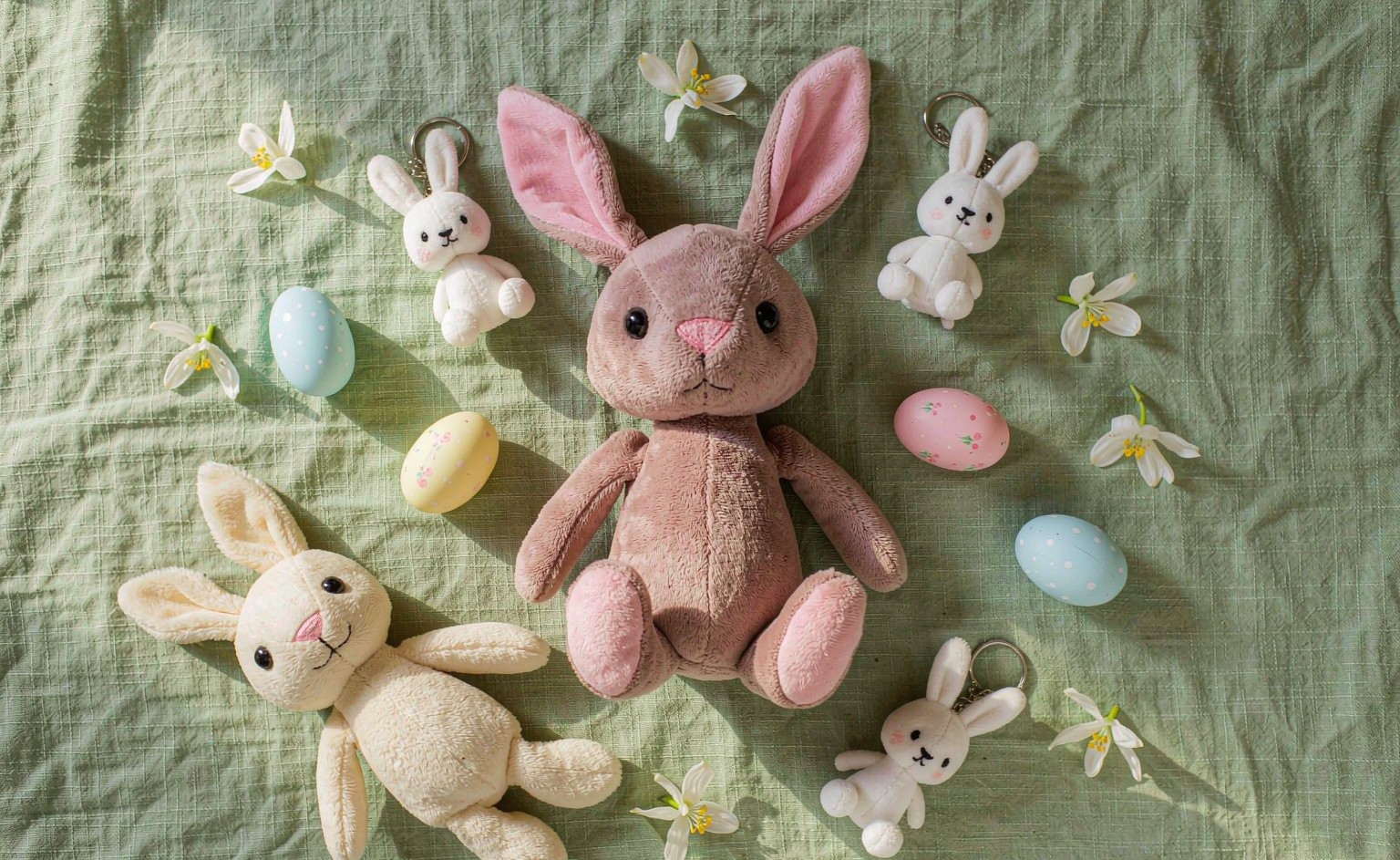
With a compressed four-week window, the assortment logic for 2027 favors depth over breadth: fewer SKUs, deeper stock, stronger character identity. The winning 2027 Easter plush programs are built around one hero character (typically the bunny — with chick, lamb, and egg-plush supporting roles) executed across 3–4 tiers:
| Tier | Count | Price Point | Role |
|---|---|---|---|
| Hero gift plush | 1–2 SKUs | $29.99–$39.99 | Weighted-base bunny, gift-boxed, personalization-ready |
| Core basket plush | 3–4 SKUs | $14.99–$24.99 | Sitting bunny/chick/lamb in muted pastels |
| Impulse stuffers | 3–5 SKUs | $5.99–$9.99 | Mini keychains, egg plush, clip-ons |
| Evergreen carryover | 1–2 SKUs | $14.99–$29.99 | Neutral-tone bunny/farm animals with no Easter detailing |
This structure concentrates production depth where sell-through is predictable and leaves the evergreen tier as inventory insurance — the assortment version of the safety-stock logic from our sourcing calendar guides.
The Easter 2027 Production Countdown
Working backward from March 28, 2027 — and against the CNY shutdown — here is the realistic program calendar:
| Milestone | Target Date | Note |
|---|---|---|
| Design freeze + supplier confirmed | October 2026 | Now. Character, tiers, palette locked |
| Samples approved | Early–mid November 2026 | Including weighted-base and personalization workflow validation |
| Order confirmed + deposit | Before December 10, 2026 | Earlier than the general CNY deadline — Easter ships first from pre-CNY slots |
| Production complete + QC passed | By early January 2027 | Easter goods get pre-CNY production priority |
| Vessel departs | By mid-January 2027 | Pre-congestion sailing window |
| Retail/distribution arrival | Early–mid February 2027 | Ahead of the February retail reset |
| Shelf date | Late February–early March 2027 | 4–5 weeks of sell window to March 28 |
The takeaway: Easter 2027 is a now-project. Programs that confirm suppliers in October ride the pre-CNY production queue with veteran crews; programs that wait for January face the shutdown, the recovery slowdown, and a March delivery that lands after the season starts.
Häufig gestellte Fragen
When is Easter 2027, and why does the date matter so much for ordering?
Easter Sunday 2027 falls on March 28 — an early date that compresses the retail sell window to roughly four weeks and pulls every upstream deadline forward. Because the Chinese New Year shutdown (February 6, 2027) sits directly in the production path, Easter 2027 plush must be ordered by early December 2026, produced by early January, and shipped by mid-January. Late programs miss the season entirely — there is no “catch-up production” window between the CNY recovery and a March 28 holiday.
What pastel colors are trending for Easter 2027 plush?
The 2027 growth tier is muted, design-forward pastels — dusty rose, sage green, buttercream, powder blue, and lavender grey — replacing the classic bright-pastel set at premium and design-led retail. Classic Easter brights (hot pink, kelly green, sunny yellow) remain essential for the basket-stuffer tier, and warm neutrals (cream, oatmeal) serve the cross-season “evergreen bunny” role that protects against leftover inventory. A balanced 2027 assortment runs roughly 40% brights, 40% muted pastels, 20% neutrals.
Are weighted-base plush bunnies safe for children?
Yes — when engineered correctly. The weight comes from sealed, segmented pellet bags double-stitched into the base cavity, never loose fill, and the design enters the same ASTM F963 / EN 71 testing regime as any children’s plush: pellet containment, seam strength, small-parts compliance. The engineering adds roughly $0.30–0.70 per unit and requires a manufacturer with documented weighted-plush experience — this is a feature to validate at the sampling stage, not to discover at inspection.
How many SKUs should an Easter plush program have?
For a compressed 2027 season, 8–12 SKUs across four tiers outperforms broad assortments: 1–2 hero gift plush (weighted-base, gift-boxed, personalization-ready), 3–4 core basket designs, 3–5 impulse stuffers, and 1–2 evergreen carryover designs in neutral tones. Depth on fewer SKUs matches the four-week sell window and the pre-CNY production reality — and the evergreen tier doubles as leftover insurance, staying full-price relevant after the holiday passes.
Can Easter plush designs sell after the holiday?
The ones designed to. Neutral-tone bunnies, farm animals (lamb, chick in non-seasonal colorways), and any design without “Happy Easter” text or overt holiday motifs remain sellable year-round as general plush — which is why we recommend 20% of every Easter assortment be holiday-agnostic. Overtly themed designs (bunny holding “Some Bunny Loves You” hearts) have real post-holiday discount risk; plan conservative quantities on those SKUs and lean on the evergreen tier to absorb the season’s demand tail.
Conclusion: Easter 2027 Rewards the Brands Already Moving
Every structural signal in the Easter 2027 market points the same direction: an early holiday, a compressed window, a maturing pastel palette, and a weighted, personalized, gift-ready product tier growing fastest. None of these trends rewards last-minute programs — the brands that win March 28 will be the ones confirming designs in October, riding pre-CNY production slots with veteran crews, and landing goods before the February retail reset.
Unter StuffPlush, we are already scheduling Easter 2027 plush programs — weighted-base engineering, muted-pastel fabric selection, and personalization workflows included. If you want an assortment plan with production dates that actually beat the shutdown, kontaktieren Sie uns this month — and browse our holiday plush capabilities und stuffed animal manufacturing lines to see how your Easter program fits alongside your Q4 and Valentine’s calendars.