 German
  English
  French
  Russian
  Korean
  Spanish
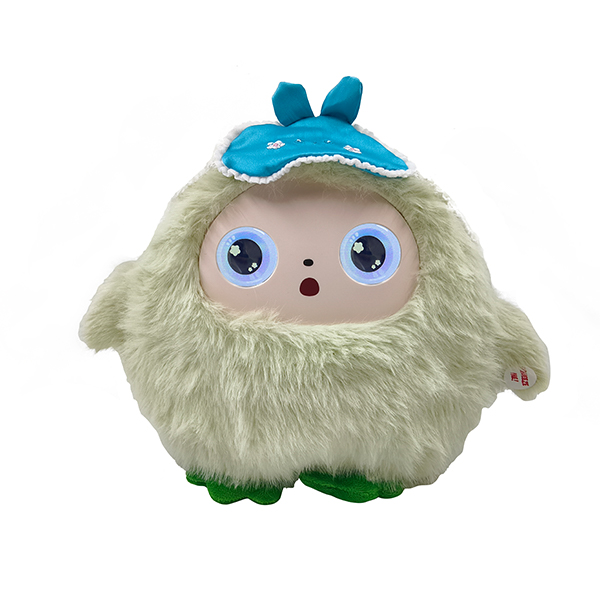
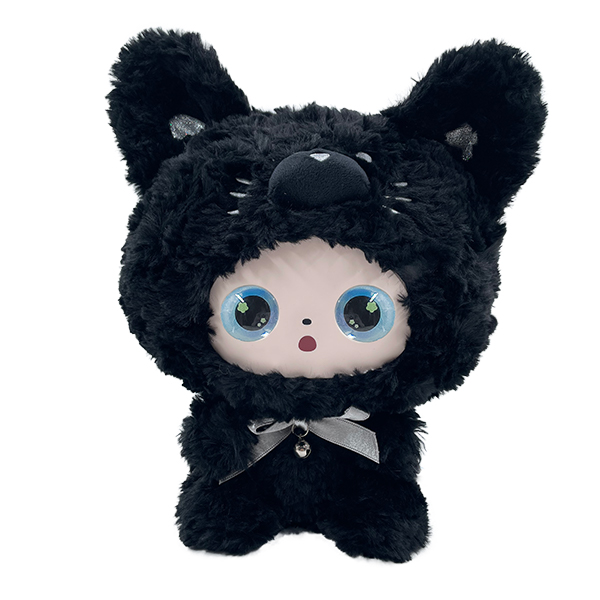
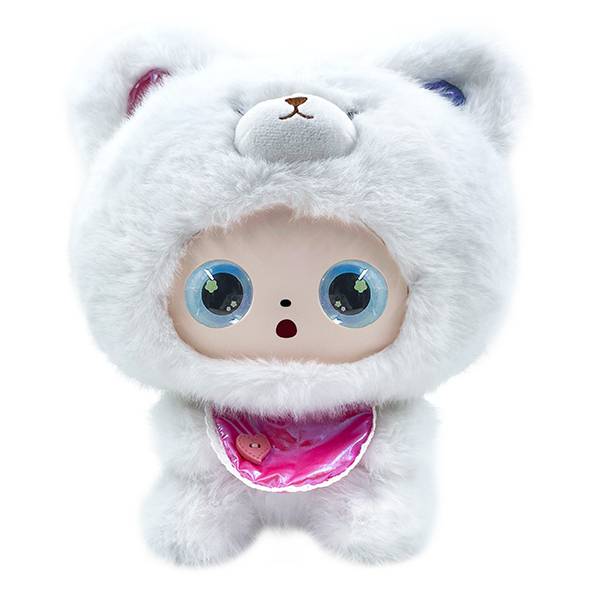
When a buyer opens a custom plush toy quotation, one line item that often raises questions is the plush toy internal structure specification. Wire armatures, plastic skeletons, foam inserts—these are not just manufacturing details; they determine whether your plush sits upright on a retail shelf, survives a child’s hug marathon, or holds a dynamic pose for a mascot display. Understanding plush toy internal structure options helps you specify the right construction for your target age group, use case, and budget before the first sample is even cut.
Unter StuffPlush, we have spent over a decade building individuelle Plüschtiere for brands ranging from boutique retailers to global licensors like Disney and McDonald’s. Our factory routinely works with all three primary plush toy internal structure types—wire armatures for poseable characters, plastic skeletons for standing mascots, and foam cores for shaped pillows—and we know which one fits which application. This guide breaks down each internal structure for plush toy option with real production data so you can make informed decisions on your next plush toy order.
Why Internal Structure Matters More Than Most Buyers Think
Die internal structure of a plush toy is its skeleton. It dictates posture stability, poseability, durability under stress, and even safety compliance for different age grades. A plush toy manufacturer that skips this plush toy internal structure discussion during the quoting stage is setting up costly rework later.
Consider these real scenarios from our production floor:
| Scenario | Wrong Structure Chosen | Consequence | Correct Structure |
|---|---|---|---|
| 14-inch mascot for retail display | Soft stuffing only | Slumps after 2 weeks, cannot stand | Plastic skeleton torso frame |
| Poseable unicorn for collectors | Rigid plastic frame | Cannot bend limbs, breaks when forced | Wire armature in limbs + neck |
| Toddler pillow pal (0+ months) | Exposed wire armature | Fails CPSIA sharp-point test | Foam core insert, no hard parts |
| Large 24-inch promotional bear | Standard stuffing density | Looks lopsided, seams strain | Layered foam core + dense PP cotton |
The cost difference between these options is typically $0.15–$0.80 per unit—but the functional difference is enormous. Let us examine each plush toy internal structure type in detail.
Wire Armatures: The Poseability Champion
Wire armatures are thin, flexible metal wires—usually aluminum or galvanized steel—inserted inside the limbs, neck, and sometimes tail of a Plüschtier. They allow the finished piece to be bent into poses and hold its shape.
How Wire Armatures Are Manufactured
The process follows a precise sequence:
- Wire selection: Aluminum wire (1.5–3.0 mm diameter) for soft flexibility, or galvanized steel (1.0–2.0 mm) for higher rigidity with some bend.
- Pre-shaping: Wires are cut to limb length plus 2–3 cm anchoring allowance, then bent into basic L-shapes or gentle curves at joints.
- Safety encapsulation: Each wire is inserted into a nylon or polypropylene tubing sleeve (minimum 0.5 mm wall thickness) and heat-sealed at both ends. This non-negotiable step prevents wire poke-through—a leading cause of plush toy safety recalls.
- Insertion during assembly: The encapsulated wire is placed inside the fabric limb before the final seam is closed, with both ends anchored into the body cavity so they cannot pull out.
- Post-stuffing verification: QC technicians bend each wired joint through a full range of motion (typically ±45° to ±90° depending on design) to confirm smooth movement without wire breakage or fabric tearing.
When to Specify Wire Armatures
| Anwendungsfall | Recommended Wire Type | Bend Range | Cost Adder (per unit) |
|---|---|---|---|
| Collectible figurines (14+ years) | Aluminum 2.0 mm | ±90° | $0.25–$0.40 |
| Mascot limbs (poseable display) | Steel 1.5 mm encapsulated | ±60° | $0.20–$0.35 |
| Animal tails (curved positioning) | Aluminum 1.5 mm | ±120° | $0.10–$0.20 |
| Eyelashes / antennae (fine detail) | Fine steel 0.8 mm | ±45° | $0.05–$0.12 |
Critical Safety Considerations for Wire Armatures
Wire armatures fall under heightened scrutiny in ASTM F963 Section 4.8 (Flexibility and Rigidity Tests) and EN71-1 Clause 5.7 (Folding and Hinge Mechanisms). Key requirements:
- Encapsulation integrity: The wire must remain fully contained after 500+ bend cycles at maximum designed angle. Our QC lab tests this with a cyclic bending fixture.
- No sharp ends: Cut wire tips must be rounded or capped. Heat-sealed tubing ends are the industry standard.
- Age grading: Wire armatures are generally restricted to products intended for children 14+ years in the US market (CPSIA small parts and sharp point rules). For EU markets, EN71 permits wired limbs on toys for children 3+ years provided the wire passes the flex-and-impact test sequence.
- Fatigue failure mode: If a wire breaks inside the Plüschtier, it must not create a sharp protrusion. This is why we use multi-strand braided wire rather than single-core—it frays safely rather than forming a needle-like point.
Procurement tip: If your product targets children under 3 years, avoid wire armatures entirely. Specify foam cores or pure stuffing instead. The plush toy materials you choose for the exterior do not mitigate internal wire hazards.
Plastic Skeletons: Structural Rigidity for Standing Designs
Plastic skeletons (also called internal frames or armature frames) provide rigid or semi-rigid support for Plüschtiere that need to stand, sit in a fixed position, or maintain proportions under their own weight. Unlike wire armatures, plastic skeletons are not meant to be reposed by the end user—they are set during manufacturing and stay that way.
Types of Plastic Skeletons in Plush Manufacturing
| Frame Type | Material | Typical Application | Weight (for 18″ plush) | Unit Cost |
|---|---|---|---|---|
| Full-body rigid frame | ABS or PP plastic, injection-molded | Large standing mascots (20″+) | 80–150g | $0.40–$0.90 |
| Torso-only semi-rigid | EVA foam sheet, die-cut | Mid-size display plush (12–18″) | 30–60g | $0.15–$0.30 |
| Limb inserts (partial) | PETG or flexible PP | Jointed but mostly rigid figures | 20–40g per limb | $0.10–$0.20 each |
| Head stabilization ring | HDPE or rigid EVA | Big-headed characters (mascot style) | 10–25g | $0.08–$0.15 |
The Manufacturing Process for Plastic Frame Integration
- Frame molding or cutting: For injection-molded frames (high-volume runs of 5,000+ units), we produce a steel mold and shoot ABS/PP frames in-house. For smaller orders or prototypes, we laser-cut EVA sheets or source pre-made PETG inserts from our component suppliers.
- Frame assembly: Multi-part frames are snapped or ultrasonically welded together before insertion. We verify dimensional tolerance against the approved tech pack (±1.0 mm standard).
- Positioning inside the shell: The frame is placed inside the sewn-but-unstuffed Plüschtier shell. Reference points (e.g., frame feet aligning with fabric foot bottom) are marked to prevent rotation or shifting during stuffing.
- Layered stuffing around the frame: This is where skill matters most. Operators hand-pack PP-Baumwollfüllung around the frame—denser near joints for support, softer in the belly for huggability. Machine filling alone cannot achieve this gradient; it requires a combination of machine bulk-fill and hand-shaping.
- Posture verification: The stuffed unit is placed on a flat surface and photographed from front/side/back. Our quality control team checks sitting/standing angle, symmetry, and frame visibility (no frame should be palpable through the fabric under normal handling).
When Plastic Skeletons Are the Right Call
- Retail shelf displays: A 16-inch character plush that must stand upright on a shelf for months without slumping needs at least a torso EVA frame. Full ABS skeleton if the design has a large head-to-body ratio.
- Corporate mascots: Brands ordering Maskottchen aus Plüsch for trade shows often request identical postures across hundreds of units. Plastic frames guarantee consistency that pure stuffing cannot.
- Large-scale productions (20″+): Beyond approximately 20 inches, the weight of the plush toy materials and stuffing alone causes sagging. Frames become structurally necessary, not optional.
- Funktionell Plüsch-Kissen: Some pillow designs use a thin EVA sheet internally to maintain a flat, rectangular shape while still feeling soft on the surface.
Foam Cores: Shape Retention Without Hard Parts
Foam cores (or foam inserts) are shaped pieces of EVA, polyurethane, or memory foam placed inside specific regions of a Plüschtier to provide localized firmness and shape definition without introducing hard plastic or metal components. They are the safest internal structure option for young age grades and the go-to choice for Plüsch-Kissen and infant products.
Foam Materials Used in Plush Manufacturing
| Foam Type | Density | Firmness | Am besten für | Safety Grade |
|---|---|---|---|---|
| EVA (ethylene-vinyl acetate) | 30–60 kg/m³ | Medium-firm | General shape retention, Plüsch-Kissen, toddler toys | 0+ months (no small parts) |
| Polyurethane (PU) foam | 25–50 kg/m³ | Soft-medium | Baby toys, cushioning layers | 0+ months |
| Memory foam | 50–80 kg/m³ | Firm with slow recovery | Premium Plüsch-Kissen, sensory products | 3+ years (density concern) |
| Reinforced foam board | 80–120 kg/m³ | Rigid | Base inserts for standing stability | All ages (fully enclosed) |
How Foam Cores Are Integrated
The foam core workflow differs from wire or plastic frames because foam is cut (not molded) and must be precisely matched to the pattern:
- Pattern-derived foam cutting: Our pattern engineers output a separate foam pattern alongside the fabric pattern. The foam piece is typically 3–8 mm smaller than the fabric piece in each dimension to allow a soft edge transition.
- Cutting method: For simple shapes (rectangles, ovals), die-cutting or band-saw cutting suffices. For complex contours (animal snouts, curved limbs), we use CNC oscillating knife cutting for ±0.5 mm accuracy.
- Edge finishing: Raw foam edges can create visible ridges through fabric. We either bevel-edge the foam (45° taper) or wrap it in a thin layer of polyester fiberfill before inserting into the fabric shell.
- Layered integration: In designs that combine foam with stuffing (most common), the foam goes into the target region first, then loose PP cotton is packed around and over it. The foam provides the shape; the stuffing provides the tactile softness.
- Compression testing: Finished units undergo a 48-hour compression-set test (foam is compressed to 50% height under 5 kg weight, then released). Acceptable permanent deformation is <15% for EVA, <10% for memory foam.
Why Foam Cores Are Gaining Market Share
Two market trends are driving increased specification of foam-core plush toy internal structures:
- Sensory and weighted plush demand: The weighted plush toy category uses compartmentalized foam chambers filled with glass beads or plastic pellets. The foam walls prevent pellet migration and maintain even weight distribution—a design impossible with pure stuffing.
- Infant and toddler product expansion: Brands entering the 0–36 month market (where ASTM F963 and CPSIA requirements are strictest) increasingly specify all-foam or foam-plus-stuffing constructions to eliminate any risk of hard-component exposure. Our Plüschtiere für Haustiere division uses reinforced foam boards inside chew-resistant shells for the same safety reasoning.
Comparing the Three Structure Types Side by Side
Choosing the right plush toy internal structure comes down to four variables: target age, desired function, unit budget, and order volume. This comparison table summarizes the tradeoffs at a glance:
| Factor | Wire Armature | Plastic Skeleton | Foam Core |
|---|---|---|---|
| Primary benefit | Poseability, repositioning | Rigid posture, standability | Shape retention, safety |
| Age suitability | 14+ (US) / 3+ (EU) | All ages (if fully enclosed) | 0+ months |
| Typical cost adder | $0.15–$0.40/unit | $0.20–$0.90/unit | $0.08–$0.25/unit |
| MOQ impact | None (hand-inserted) | Mold cost amortized above 3,000 pcs | None (cut-to-order) |
| Weight impact | +10–30g | +30–150g | +15–60g |
| Washability | Not recommended (wire rust risk) | Spot clean only | Hand washable (foam dries slowly) |
| Best product types | Collectibles, poseable mascots | Standing mascots, large displays | Pillows, infant toys, Plüsch-Rucksäcke |
| Safety testing required | ASTM F963 §4.8, EN71-1 §5.7 | ASTM F963 §4.8 (rigidity), EN71-1 §5.7 | CPSIA material safety, EN71-3 (heavy metals in foam) |
| Production lead time impact | +1–2 days (hand insertion) | +3–7 days (frame sourcing/molding) | +1 day (cutting) |
Hybrid Structures: Combining Methods for Complex Designs
Many professional-grade individuelle Plüschtiere use hybrid internal structures to achieve multiple objectives simultaneously. Common combinations we manufacture at StuffPlush include:
| Combination | Example Product | Why It Works |
|---|---|---|
| Foam torso + wire limbs | Poseable collectible figure (12″) | Body stays plump and shapely; arms/legs bend for display |
| Plastic spine + foam head | Big-headed mascot (18″) | Head proportion maintained without wobbling; spine keeps it upright |
| Foam base + pure stuffing upper | Plush pillow with 3D character | Sits flat on a bed; upper body is cuddly |
| Reinforced foam board + chew-resistant shell | Dog plush toy (durable line) | Withstands chewing pressure; no hard parts to swallow |
| Wire tail + foam body | Realistic animal (horse, giraffe) | Tail curves naturally; body stays smoothly contoured |
Hybrid structures add $0.10–$0.30 per unit in labor (multiple insertion steps) but open up design possibilities that single-method constructions cannot match. When you request a quote from StuffPlush, specify “hybrid internal structure” and describe the desired behavior for each body region—we will engineer the appropriate combination.
How to Specify Internal Structure in Your Next Plush Order
To avoid ambiguity and ensure your plush toy manufacturer builds exactly what you envision, include these details in your tech pack or RFQ:
Minimum Specification Checklist
- [ ] Target age grade: Determines which structure types are legally permissible
- [ ] Desired posture: Sitting, standing, lying down, or poseable?
- [ ] Size range: Structures scale nonlinearly—an 8-inch plush may need no frame, while a 24-inch one requires full skeleton
- [ ] End-use environment: Retail shelf (long-term standing), child’s bedroom (hugging/washing), or collector display (pose changes)?
- [ ] Budget per unit: Structure choice is one of the highest-leverage cost drivers after fabric selection
- [ ] Safety certification target: ASTM F963 (US), EN71 (EU), AS/NZS ISO 8124 (AU/NZ), or multiple?
- [ ] Reference sample or photo: Even a cellphone photo of a similar product with the desired “feel” helps our engineers recommend the right plush toy internal structure
Sample RFQ Language
“We need 5,000 units of a 16-inch standing cat mascot. Target age: 14+. Must stand unassisted on a flat shelf for retail display. Limbs should have slight poseability for photo shoots. Please quote with recommended internal structure for plush toy and explain your rationale.”
This type of specification lets our engineering team propose the optimal solution (likely: EVA torso frame + aluminum wire in limbs for this case) rather than defaulting to the cheapest option that may not meet your real-world needs.
Häufig gestellte Fragen
Can wire armatures be added to an existing plush toy design after sampling?
Yes, but it requires a pattern revision. Wire armatures need slightly wider seam allowances (typically +3–5 mm) in the affected limbs to accommodate the encapsulated wire diameter without creating visible bulges. If your approved sample was made without wires, we will need to produce a new sample with the modified pattern. Plan for one additional sampling round (7–10 days) when adding wire armatures to a previously approved design.
Do plastic skeletons make a plush toy unsafe for young children?
Not inherently. The key factor is encapsulation. If the plastic frame is fully enclosed within the Plüschtier shell and cannot be felt or accessed by the user, it passes safety standards for all age grades including 0+. Our QC team performs a “palpation test”—running hands over the entire surface to confirm no frame edges are detectable. However, if there is any risk of frame migration or exposure (e.g., very thin stretch fabrics), we will recommend switching to foam core or increasing fabric weight.
How does internal structure affect shipping costs?
Indirectly but significantly. Plastic skeletons add the most weight (+30–150g per unit), which increases volumetric weight for air freight calculations. Wire armatures add minimal weight but may require special handling (magnetic detection flags ferrous steel in some customs scans). Foam cores add moderate weight but can be compressed during vacuum packaging, partially offsetting freight costs. For a 5,000-unit order shipping by sea, the structure choice rarely changes CBM meaningfully; for air freight, the weight difference between a no-frame and full-skeleton design can add $0.30–$1.20 per unit in freight charges.
What is the minimum order quantity for custom internal structures?
There is no universal MOQ threshold for specifying a particular plush toy internal structure. Wire armatures and foam cores are hand-cut and inserted, so they work at any quantity—including our standard 1,000-piece MOQ. Plastic injection-molded frames become cost-effective above approximately 3,000 units (amortizing the $200–$800 mold cost). Below that threshold, we substitute die-cut EVA sheets or sourced generic frames at a slightly higher per-unit cost. Discuss your target quantity with our sales team during the quoting phase—we will recommend the most economical structure approach for your run size.
Can internal structures be repaired if they break?
Wire armatures are the most repairable: a skilled operator can open a seam, replace the broken wire section with a new encapsulated segment, and reseal. Plastic skeleton repairs are generally not feasible—the frame is integrated during assembly and cannot be swapped without essentially disassembling the entire Plüschtier. Foam cores can be supplemented (adding more foam through a small opening) but not easily replaced entirely. For products expected to see heavy use (e.g., Plüschtiere für Haustiere, amusement park mascots), we recommend over-engineering the initial structure rather than planning for field repairs.
Ready to specify the perfect internal structure for your next custom plush project? Contact the StuffPlush team with your design reference and target specs—we will recommend the optimal wire, plastic, or foam configuration and provide a detailed quotation within 48 hours. Whether you need 500 poseable collectibles or 10,000 standing mascots, our engineering team has built every plush toy internal structure variant in commercial production, and we know which one fits your brand, budget, and timeline.